
In today's zeitgeist, everything must be optimized or we'll fail: our time, productivity, fitness, diet, supplements, career, income, wealth--everything must be constantly optimized lest we fall behind or fail.
The grand irony is optimization generates fragility which generates failure which generates denial which eventually generates rage. We've optimized global supply chains for efficiency and cost, rendering them exquisitely vulnerable to disruption and collapse. We've optimized the global economy for "growth" based on expanding consumption of energy and everything that depends on energy, which is everything.
To fund this endless expansion of consumption, everyone must borrow more money to buy more than their income allows. To enable this endless expansion of debt, money must be nearly free to borrow after adjusting for inflation.
The irony here is when money has no cost, it's squandered on excess consumption or speculation. The incentive to borrow and spend / invest wisely is that borrowing money has a high cost. Reduce the cost to boost borrowing / consumption / speculation and you create credit-asset bubbles and households, enterprises and governments one mis-step from insolvency.
Optimization raises expectations to lofty heights. The promise of optimization is endless--there's no limit to optimization, and so there's no limit to technology, profits, health, wealth and prosperity. If we keep optimizing, everything becomes possible. By tweaking technology and finance, we can endlessly expand consumption and wealth.
The mindset this generates is: follow the rules of optimization and you'll enjoy all the benefits of success. Optimize your career by borrowing a small fortune to obtain a university diploma, chase the Next Big Thing, optimize your engagement, visibility, and the buzzword du jour, and all the good things in life will be within reach.
The expectations are as fragile as the system they rely on. We've been taught that "our vote counts," that democracy means we have a say in collective decisions via representatives we elect. We've been taught we have agency--control of our destiny: work hard, work smart, optimize work flows and innovation, and anyone can be a startup founder who cashes out with millions of dollars--and the high agency that comes from high visibility.
Except all of this that's presented as stable, trustworthy, predictable and real is fragile, unstable and artificial--simulations of stability, trust and predictability. The belief that this vast system of mythologies, beliefs and "the real world" is as it's presented is civilizational psychosis, a self-reinforcing state of denial in which some new innovation / optimization will "solve" whatever problems arise.
So what's the optimized solution when optimization itself is the problem? What if a new product or profitable technology is not a solution but an extension of optimized fragility?
What's been optimized is centralization of power and control in the hands of the few because distributed capital, agency, power and control are inefficient. So we inhabit a world of overlapping monopolies and cartels, the marriage of state and private sector monopolies. In terms of optimizing profits, the optimized structure is monopoly. Nothing else comes close. So an economy of overlapping monopolies and shared-monopoly (i.e. cartels) is the perfection of a system optimized to maximize profits for the owners of the monopolies.
This is why it doesn't matter who you vote for, as the decisions are made to suit the interests of those at the top of the optimized concentrations of power pyramid. The masses are fed distractions, us-vs-them divisions, fake virtue-signaling policy-tweak "solutions," and a circus of entertainment.
As for optimizing security and a place in the sun--oops, you didn't optimize enough. You didn't optimize innovation enough, and let's face it, you didn't optimize optimization enough, so you failed. Maybe your AI chatbot can console you.
High expectations lead to dreams dashed which leads to denial crumbling on contact with the real world. And when denial crumbles and the scales fall from our eyes, and we see everything that was presented as authentic is actually artificial, a synthetic simulation designed to obscure the gearing of an increasingly fragile system, our sense of betrayal, the shattering of trust, the awareness that we've been lied to, conned, to benefit those doing the bamboozling, then we become angry.
We become angry because we're social beings who depend on trust and truth to function as a group that benefits its members and not just its leaders. When trust and truth have been replaced by artifices to serve the interests of leaders touting how the system benefits everyone, the group dynamics transition from positive to destructive. Nobody likes being conned, and there is a selective advantage to this trait.
Part of the con is to claim that we can collectively transit smoothly from denial to acceptance, skipping the messy, difficult stages of anger, bargaining and depression. (Kubler-Ross's progression of the five stages of grief: denial, anger, bargaining, depression, acceptance.) But this isn't how we're wired, and this progression cannot be optimized away.
So never mind you're selling your blood to make ends meet while a handful of others are about to reap fortunes in IPOs. Just accept this is your lot in life. Not all outcomes are equal, creative destruction, blah blah blah.
But what if optimization is the techno-speak cover story for a rigged casino? What if all the buzzwords --innovation, growth, super-abundance, and so on--are all techno-speak cover stories for the substitution of economic metrics for a life that's actually worth living?
We've been herded into a Mouse Utopia of metrics--financial metrics, systems, data, models--that leaves out the reality that we exist in a moral universe in which trust and truth matter more than GDP, stock markets, and the hollow, surreal realm of consumerist transactions.
In this universe, anger leads to redress or retribution. The current system is optimized to avoid redress by optimizing the substitution of artifice for authenticity. This optimization has reached such perfection that the status quo leaders, public and private, believe their mastery of this substitution will continue protecting them from public anger come what may. Just pull the levers, and the public will continue believing.
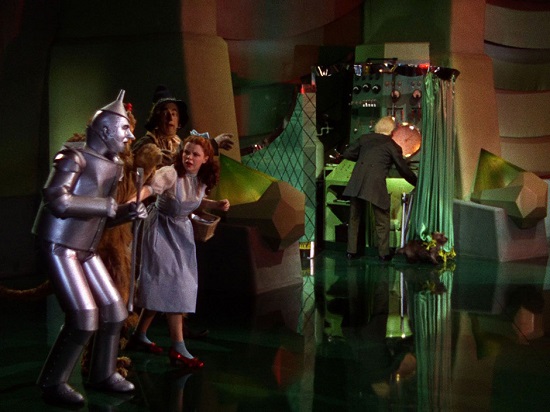
Our leaders have effectively optimized their belief in their own PR. There is no need for redress because the public will accept more of the same: distractions, us-vs-them divisions, fake virtue-signaling policy-tweak "solutions," and a circus of entertainment.
But this isn't how the transition from denial to anger works. Applying more of the same will only push anger into rage, where it becomes an emergent force with non-linear dynamics: unpredictable, uncontrollable.
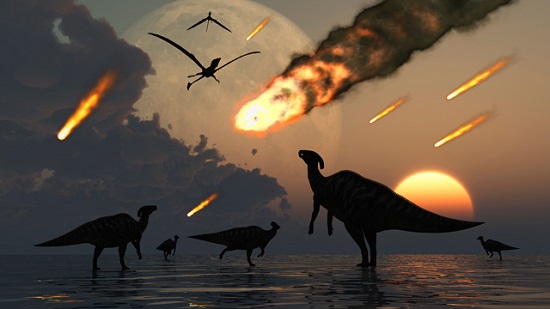
In terms of optimized metrics and systems, rage is irrational. In the moral universe, it's perfectly rational. What happens when an unexpected asteroid shatters all the interconnected fragilities of hyper-optimized supply chains and finance?
We can rephrase this to: what happens when optimization is itself the point of failure? What happens when the optimization of substituting artifice for authenticity to mask the decay of trust and truth fails?
All this boils down to: what happens when redress is set aside as needless? That leaves retribution as the only outlet for all the energy being converted from denial to anger.
What seemed preposterous before the asteroid is later recognized as destiny.
NEW PODCAST: Dennis Tubbergen and I discuss the growing risks facing the U.S. and global economy. (32:45 min)
My book Investing In Revolution is available at a 10% discount ($18 for the paperback, $24 for the hardcover and $8.95 for the ebook edition). Introduction (free)
Become a $3/month patron of my work via patreon.com
Subscribe to my Substack for free
NOTE: Contributions/subscriptions are acknowledged in the order received. Your name and email remain confidential and will not be given to any other individual, company or agency.
|
Thank you, JD ($70), for your marvelously generous subscription to this site -- I am greatly honored by your support and readership. |
Thank you, Todd D. ($70), for your wondrously generous subscription to this site -- I am greatly honored by your support and readership. |
|
|
Thank you, Steven K. ($7/month) for your splendidly generous subscription to this site -- I am greatly honored by your support and readership. |
Thank you, Christopher P. ($70) for your enormously generous subscription to this site -- I am greatly honored by your support and readership. |