



Sunday, March 13, 2022

Serf-Expression

Eventually the "flock of timid and industrious animals" changes their minds about how much exploitation by the few is acceptable.

You may have noticed the news flow beyond the hot war in Ukraine is largely focused on capital: financial capital (markets, liquidity, interest rates, commodities, central bank tightening, etc.) and political capital (geopolitical maneuvering, sanctions, revising energy and defense policies, etc.)

Notice who's left out, unnoticed and invisible? The serfs, the bottom 90% who have been decapitalized in the developed world and exploited in the developing world for the past 45 years.

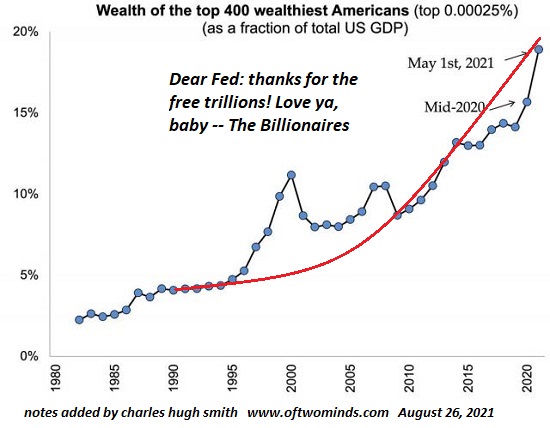
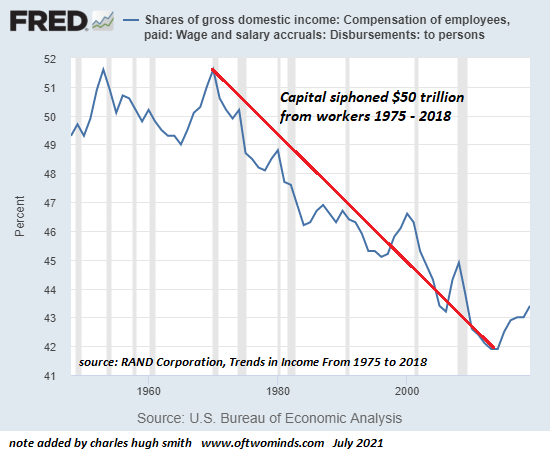
With capital ascendant, the vast majority of financial and political gains flowed to the top tier of speculative capital (banks and billionaires) while the purchasing power of labor (i.e. wages) has been in a 45-year descent. (See chart below)

This disemboweling of labor transferred $50 trillion from labor to capital in the U.S. alone. Financialization and globalization devalued labor and working-class assets such as savings and boosted leveraged speculative bets only available to financiers and corporations, for example, stock buybacks funded by the tsunami of free money for financiers unleashed by the Federal Reserve and other central banks. (See chart below)

Even though the corporate media gives it no notice, serf-expression will become increasingly consequential. No, serf-expression is not a typo for self-expression, the core doctrine of modernism. By serf-expression I mean the serf's expression of what is no longer acceptable. Another term for this is cultural revolution. I address social and cultural revolutions in my new book, Global Crisis, National Renewal: A (Revolutionary) Grand Strategy for the United States.

Is a Cultural Revolution Brewing in America? (April 9, 2021)

When the serfs no longer believe in the divine right of banks and billionaires, then the concentration of economic and political power in the hands of the few will no longer be acceptable, regardless of the fawning rationalizations being offered by the toadies, sycophants, enforcers, apparatchiks, minions, lackeys and other apologists for a status quo that benefits the few at the expense of the many.

Serf expressions are not organized by centralized political parties; they are self-organizing revolts against a failed religion worshiping capital and a failed system of centralized authoritarianism and exploitation. Serf expressions arise without warning and cannot be controlled by centralized authoritarianism, as the revolution is in the sphere of values and what's no longer acceptable, rather than in the sphere of politics.

Serf expressions will surprise a ruling order that reckoned the serfs would docilely accept any level of exploitation. Alexis De Tocqueville's trenchant description from his classic book, Democracy in America (1840), comes to mind: "The will is not shattered, but softened, bent, and guided: men are seldom forced by it to act, but they are constantly restrained from acting: such a power does not destroy... it does not tyrannize, but it compresses, enervates, extinguishes and stupefies a people, till the nation is reduced to be nothing better than a flock of timid and industrious animals."

Eventually the "flock of timid and industrious animals" changes their minds about how much exploitation by the few is acceptable. Every repressive move by centralized authorities will only harden the resolve of the serfs that the divine right of banks and billionaires is false and the exploitation of the many for the benefit of the few is no longer acceptable.

The ruling elites' vast army of well-paid toadies, sycophants, enforcers, apparatchiks, minions and lackeys are all quick to declare this is impossible. Let's check back in ten years, in 2032, and see who's right.



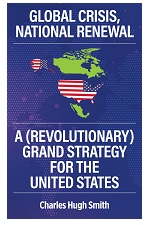
My new book is now available at a 10% discount this month: Global Crisis, National Renewal: A (Revolutionary) Grand Strategy for the United States (Kindle $8.95, print $20)

If you found value in this content, please join me in seeking solutions by becoming a $1/month patron of my work via patreon.com.


Recent Videos/Podcasts:

Charles Hugh Smith on The Great Reset Agenda (42 minutes, with Richard Bonugli)


My recent books:

Global Crisis, National Renewal: A (Revolutionary) Grand Strategy for the United States (Kindle $9.95, print $25, audiobook) Read Chapter One for free (PDF).

A Hacker's Teleology: Sharing the Wealth of Our Shrinking Planet (Kindle $8.95, print $20, audiobook $17.46) Read the first section for free (PDF).

Will You Be Richer or Poorer?: Profit, Power, and AI in a Traumatized World
(Kindle $5, print $10, audiobook) Read the first section for free (PDF).

Pathfinding our Destiny: Preventing the Final Fall of Our Democratic Republic ($5 Kindle, $10 print, ( audiobook): Read the first section for free (PDF).

The Adventures of the Consulting Philosopher: The Disappearance of Drake $1.29 Kindle, $8.95 print); read the first chapters for free (PDF)

Money and Work Unchained $6.95 Kindle, $15 print)
Read the first section for free


Become a $1/month patron of my work via patreon.com.


NOTE: Contributions/subscriptions are acknowledged in the order received. Your name and email remain confidential and will not be given to any other individual, company or agency.

Thank you, Kirk P. ($60), for your splendidly generous contribution to this site -- I am greatly honored by your support and readership.


Thank you, Christopher D. ($50), for your marvelously generous contribution to this site -- I am greatly honored by your steadfast support and readership.


Thank you, Buck V. ($200), for your beyond-outrageously generous contribution to this site -- I am greatly honored by your steadfast support and readership.


Thank you, T.G.N. ($100), for your outrageously generous contribution to this site -- I am greatly honored by your steadfast support and readership.

Read more...

Friday, March 11, 2022

The Only Non-Totalitarian Solution to Resource Scarcity: Decentralized Degrowth

Totalitarian imposed inequality is the only possible path of centralized Degrowth: 10,000 for me, one for you, unless you disobey, and then you get zero.

The fantasy is that everything will soon be super-abundant and cheap again because creating money out of thin air creates demand out of thin air and supply will always magically appear if there is demand. The reality is super-abundant and cheap is gone for good. Demand doesn't create new supply by magic; if the supply is gone, then demand has no magical power to conjure supply out of thin air.

The other fantasy is that there will always be a cheap substitute for whatever's been depleted. If the oil is depleted in one place, there's still plenty to extract in Timbukthree. Or we'll replace oil with electricity generated by high-tech paint on our roofs, and we'll replace all those thousands of giant airliners using jet fuel with little, slow electric aircraft--nothing will change except we'll continue to have more of everything.

The reality is the current global economy is a Landfill Economy that glorifies waste as growth. The faster shoddy goods fail and are taken to the Landfill and replaced with a new one, the higher our "growth." The greater the waste, friction and fraud, the greater the "growth."

There is an sane alternative to this insanity. It's called Degrowth. Degrowth is the English translation of decroissance, a French word coined in 1976 to describe a philosophy that has expanded into a global movement from 1977 to the present. The root meaning is decline, which refers to both the economy and the state. The core thesis of my new book and the degrowth movement is the global economy based on permanent expansion of consumption is unsustainable due to physical and cost limits: infinite growth on a finite planet is not possible.

The problem is the current global economic system is optimized for permanent expansion, as the consensus holds that without permanent expansion, the world will fall into the abyss of depression and the conflicts that arise from widespread economic hardship.

What the consensus conveniently ignores is the world has changed in the past 90 years of fast-rising consumption. The human population was much smaller in 1930 and per capita consumption was a fraction of current consumption of energy and resources. Recoverable resources are no longer abundant, and humanity's vast consumption of hydrocarbons has had planetary consequences.

The degrowth movement holds that this obsession with permanent growth is not just unrealistic, it is destructive to society, as every aspect of everyday life has been oriented to the goal of expanding consumption. This tyranny of growth has distilled all of human endeavor into measures of growth such as Gross Domestic Product (GDP) while ignoring the costs and risks of this absurd tyranny of infinite growth or we all die.

In practical terms, Degrowth means:

1) Doing more--much more--with much less by eliminating unproductive waste, friction, fraud and speculative skimming

2) Incentivizing radically improving efficiencies and productivity: doing more with less capital, resources and labor

3) Decentralizing capital and agency down to local levels of problem-solving and production of essentials

4) Eliminating the :Landfill Economy of shoddy goods and services and planned obsolescence

5) Deglobalizing and definancializing our economy and our daily lives to improve adaptability, flexibility and innovation in service not of highly concentrated wealth in the hands of the few but of the well-being of the many.

The billionaire's toadies in the World Economic Forum (WEF) have promoted a centralized, totalitarian version of Degrowth that leaves the wealth and power in the hands of the few while imprisoning the rest of us in a new-fangled Gulag. It's called The Great Reset. The glossy The Great Reset PR is a packaged set of superficial happy stories about climate change, the 4th Industrial Revolution, blah blah blah which studiously avoids mentioning the most important feature of The Great Reset:

The billionaires get to enjoy their $100 million yachts, private jets and heavily guarded compounds while the rest of us toil as serfs on the plantations of the wealthiest few. The The Great Reset PR tagline is "You'll own nothing and be a happy serf!" or something like that.

As for serfs who try to escape the plantation--no bread for you. The core of The Great Reset is a system of social control and punishment that would make totalitarian dictators everywhere weep with envy.

Totalitarian imposed inequality is the only possible path of centralized Degrowth: 10,000 for me, one for you, unless you disobey, and then you get zero.

The alternative is decentralized Degrowth that resets the system's incentives from waste, friction, fraud and the dominance of centralized inequality to a locally controlled sustainability. I've prepared a roadmap to such a system. Maybe somebody else has a better one, but we have to start somewhere. Here's mine: Global Crisis, National Renewal: A (Revolutionary) Grand Strategy for the United States. You don't have to buy the book; the first section is free.

There is a solution that works for everyone except those with the $100 million yachts, jets and compounds and their WEF toadies: decentralized degrowth. Maybe the billionaires will have to squander fewer resources and the WEF toadies will have to learn to do something other than kiss billionaire's derrieres. Oh, boo-hoo. How cruel and awful that the rest of us might actually have a say and some capital.

Charles Hugh Smith on The Great Reset Agenda (42 minutes, with Richard Bonugli)


My new book is now available at a 10% discount this month: Global Crisis, National Renewal: A (Revolutionary) Grand Strategy for the United States (Kindle $8.95, print $20)

If you found value in this content, please join me in seeking solutions by becoming a $1/month patron of my work via patreon.com.


Recent Videos/Podcasts:

Charles Hugh Smith on The Great Reset Agenda (42 minutes, with Richard Bonugli)


My recent books:

Global Crisis, National Renewal: A (Revolutionary) Grand Strategy for the United States (Kindle $9.95, print $25) Read Chapter One for free (PDF).

A Hacker's Teleology: Sharing the Wealth of Our Shrinking Planet (Kindle $8.95, print $20, audiobook $17.46) Read the first section for free (PDF).

Will You Be Richer or Poorer?: Profit, Power, and AI in a Traumatized World
(Kindle $5, print $10, audiobook) Read the first section for free (PDF).

Pathfinding our Destiny: Preventing the Final Fall of Our Democratic Republic ($5 Kindle, $10 print, ( audiobook): Read the first section for free (PDF).

The Adventures of the Consulting Philosopher: The Disappearance of Drake $1.29 Kindle, $8.95 print); read the first chapters for free (PDF)

Money and Work Unchained $6.95 Kindle, $15 print)
Read the first section for free


Become a $1/month patron of my work via patreon.com.


NOTE: Contributions/subscriptions are acknowledged in the order received. Your name and email remain confidential and will not be given to any other individual, company or agency.

Thank you, Michael N. ($54), for your splendidly generous contribution to this site -- I am greatly honored by your support and readership.


Thank you, Claire V. ($50), for your marvelously generous contribution to this site -- I am greatly honored by your support and readership.


Thank you, Richard F. ($50), for your superbly generous contribution to this site -- I am greatly honored by your support and readership.


Thank you, Craig W. ($50), for your magnificently generous contribution to this site -- I am greatly honored by your support and readership.

Read more...

Wednesday, March 09, 2022

The Upside of a Crushing Recession

Unbeknownst to those trembling in fear of a crushing recession, the crushing recession they fear is the only curative for a fatally distorted system which has lost touch with reality.

Everyone looking at the inevitability of recession with alarm is forgetting the many upsides of recession, especially one that crushes all attempts to reverse it with the usual tricks. Let's not forget the simple joys of lighter traffic, faster commutes and the relative ease of getting a table at your favorite bistro--if it survives the bust.

Graveyard levity aside, there really is no equivalent to the positive force of crushing recessions. Only recessions which defy the usual tricks of monetary easing (create trillions of new dollars) and fiscal stimulus (give away a few of those new trillions) have the power to cleanse a system clogged with dysfunction, waste, fraud, corruption and financial zombies that soak of resources while doing little more than enriching the few at the expense of the many.

The problem with free money is that there's no mechanism to distinguish between waste and productive investment or fraud and productive utilization. All uses of free money are equally beneficial because if this free money is squandered, there's always more to spend tomorrow. In other words, in a system in which free money is the solution to all problems, there's no motivation to limit waste, friction or fraud because there's always enough free money for both waste, friction and fraud and needed spending and investment.

Recessions driven by inflation and the collapse of speculative bubbles aren't fixable with free money because free money fires up the afterburner of inflation. Once there are limits on how much free money can be created and distributed, squandering what's left on waste, friction and fraud means there's not enough left to fund essential services and invest in the only real-world source of income and wealth, increasing productivity--doing more with less capital, labor and resources.

Only crushing recessions introduce the discipline of having to choose between waste, friction and fraud and essential services and investments. Waste, friction and fraud aren't simply gargantuan drains on resources; they corrupt the system by incentivizing friction (unproductive complexity and gatekeeping) and fraud (collusion, fraudulent billing, buying political favors, insider trading, etc.) and giving the recipients of friction and fraud the financial means to protect their fiefdoms with complexity thickets and political protection.

Financial systems that never experience crushing recessions can't tell the difference between a speculative mania driven by corporate buybacks and a bull market driven by improving productivity that lifts both profits and wages. The phony charade of speculative bubbles inflated by the Federal Reserve's spew of free money for financiers fatally distort the entire incentive structure of the financial system, which then balloons up and fatally distorts the entire economy.

Unbeknownst to those trembling in fear of a crushing recession, the crushing recession they fear is the only curative for a fatally distorted system which has lost touch with reality: yes, there is a difference between speculative bubbles and bull markets, and yes, there is a difference between an economy riddled with the cancers of waste, friction and fraud and one strengthened by incentives and corrective mechanisms that bury unproductive zombie financial entities and reward those who actually increase productivity rather than destroy it.


My new book is now available at a 10% discount this month: Global Crisis, National Renewal: A (Revolutionary) Grand Strategy for the United States (Kindle $8.95, print $20)

If you found value in this content, please join me in seeking solutions by becoming a $1/month patron of my work via patreon.com.


Recent Videos/Podcasts:

Charles Hugh Smith on The Great Reset Agenda (42 minutes, with Richard Bonugli)


My recent books:

Global Crisis, National Renewal: A (Revolutionary) Grand Strategy for the United States (Kindle $9.95, print $25) Read Chapter One for free (PDF).

A Hacker's Teleology: Sharing the Wealth of Our Shrinking Planet (Kindle $8.95, print $20, audiobook $17.46) Read the first section for free (PDF).

Will You Be Richer or Poorer?: Profit, Power, and AI in a Traumatized World
(Kindle $5, print $10, audiobook) Read the first section for free (PDF).

Pathfinding our Destiny: Preventing the Final Fall of Our Democratic Republic ($5 Kindle, $10 print, ( audiobook): Read the first section for free (PDF).

The Adventures of the Consulting Philosopher: The Disappearance of Drake $1.29 Kindle, $8.95 print); read the first chapters for free (PDF)

Money and Work Unchained $6.95 Kindle, $15 print)
Read the first section for free


Become a $1/month patron of my work via patreon.com.


NOTE: Contributions/subscriptions are acknowledged in the order received. Your name and email remain confidential and will not be given to any other individual, company or agency.

Thank you, Cudick A. ($108), for your outrageously generous contribution to this site -- I am greatly honored by your steadfast support and readership.


Thank you, Bari H. ($100), for your outrageously generous contribution to this site -- I am greatly honored by your support and readership.


Thank you, Edward M. ($54), for your superbly generous contribution to this site -- I am greatly honored by your support and readership.


Thank you, Wesley W. ($5/month), for your magnificently generous pledge to this site -- I am greatly honored by your support and readership.

Read more...

Monday, March 07, 2022

What If It Breaks?

Making your entire economy a Landfill Economy dependent on the fantasy of infinite replacements and substitutions is the height of hubris and folly.

Very few people ask: what if it breaks? It's a question we can ask of a great many things: touchscreens, motherboards, tools, vehicles, supply chains and entire systems: what if it breaks?

The first thing we notice is the great number of things which can't be repaired, they can only be replaced. Good luck repairing the touchscreen or motherboard in your vehicle. Oops, the puncture in your tire is in the sidewall, no repair possible, buy a new tire.

The entire economic system assumes two things: 1) there will always be replacements for everything that can't be repaired and 2) there will always be substitutes for everything we want. Beef too expensive? Then buy fake-meat. If that's too expensive, substitute chicken. And so on: there will always be a substitute that can scale globally that will get cheaper as it scales.

Unfortunately, both assumptions are false. There are no replacements for oil and fertilizers. What we have are ifs: if we build 1,000 nuclear reactors, then we can convert this electricity into hydrogen which will be the fuel of the future. And so on. If, if, if. Nice, but getting beyond if is non-trivial: oops, we need hydrocarbon energy to build the 1,000 nuclear reactors and all the complex equipment to convert seawater into hydrogen on a scale large enough to matter.

Not only are there no substitutes for many things, there are no replacement parts, either. Too bad about your entire Smart Home system going down. The vendor of the do-hickey that's connected to your hub went out of business and so there's no replacement parts or software upgrades. Looks like you'll have to replace the entire system. But since the software was out of date anyway, it was time to upgrade anyway.

The problem is we can't replace entire systems when they break down. Sewage treatment, delivery of food, manufacture of medical supplies and medications, delivery of feedstock for plastics manufacturing--the entire global economy is now a tightly bound system with few replacements for anything that matters and no substitutions for all the things that matter.

One of the few positive movements of the past few years is right to repair. The idea here is to outlaw corporation's favorite trick to speed your old product's pathway to the Landfill by sealing the device to make it impossible to open and voiding the warranty should anyone attempt to repair what was designed to be unrepairable.

The foundation of the Landfill Economy is to make stuff that can't be repaired and is designed to fail so you have to buy a new one--and soon. But repair is not guaranteed. If you happen to own a vehicle which was manufactured in the millions, there will likely be third-party suppliers for parts. But time and cost both erode the availability of replacement parts. There is no guarantee replacement parts will be available. Yes, some can be extruded in 3D printers, but there are a great many things that can't be fabbed on 3D printers: specialty wires, computer chips, alloys, etc.

Moving on to larger scale systems: where's the replacement parts when democracy breaks? How about the systems that deliver oil and fresh food over thousands of miles?

The dependability of these unrepairable systems has given us a false confidence in their permanence and durability. As more things become sole-source, as supply chains stretch and add additional points of failure, as the dependency chains increase in complexity, all these systems--political, technological, logistics--become more fragile--the opposite of durable.

The "buy a new one" faith in the infinite powers of substitution has stripped the economy of resilience and the ability to fashion workarounds. Since things can no longer be repaired, nobody knows how to repair anything. Since everything is sealed, nobody even knows what's inside the system. Since we're assured everything can be substituted and replaced, we no longer know how anything actually works. The best and the brightest have never seen a green bean growing on the plant or considered how all the goodies that make their "money" useful-- as in, there are things available for your "money" to buy--were fabricated or grown, cleaned, packaged, shipped and delivered.

As I explain in my book Global Crisis, National Renewal: A (Revolutionary) Grand Strategy for the United States, tightly bound systems and centralized systems are essentially designed to fail. Load the system with dependency chains choked with points of failure for which there are no fixes or substitutes and then stretch those chains across the globe and you get a system optimized for fragility and failure.

What if it breaks? What's your Plan B, your workaround, your fix? What if you can't buy a new food delivery system off the shelf, or a new democracy that all you have to do is unwrap and plug it in? Where are the cheap, abundant substitutions for everything that's now chronically scarce because there are no substitutes?

Making your entire economy a Landfill Economy dependent on the fantasy of infinite replacements and substitutions is the height of hubris and folly, right up there with war is a solution that will fix everything that's broken.


My new book is now available at a 10% discount this month: Global Crisis, National Renewal: A (Revolutionary) Grand Strategy for the United States (Kindle $8.95, print $20)

If you found value in this content, please join me in seeking solutions by becoming a $1/month patron of my work via patreon.com.


Recent Videos/Podcasts:

Charles Hugh Smith on The Great Reset Agenda (42 minutes, with Richard Bonugli)


My recent books:

Global Crisis, National Renewal: A (Revolutionary) Grand Strategy for the United States (Kindle $9.95, print $25) Read Chapter One for free (PDF).

A Hacker's Teleology: Sharing the Wealth of Our Shrinking Planet (Kindle $8.95, print $20, audiobook $17.46) Read the first section for free (PDF).

Will You Be Richer or Poorer?: Profit, Power, and AI in a Traumatized World
(Kindle $5, print $10, audiobook) Read the first section for free (PDF).

Pathfinding our Destiny: Preventing the Final Fall of Our Democratic Republic ($5 Kindle, $10 print, ( audiobook): Read the first section for free (PDF).

The Adventures of the Consulting Philosopher: The Disappearance of Drake $1.29 Kindle, $8.95 print); read the first chapters for free (PDF)

Money and Work Unchained $6.95 Kindle, $15 print)
Read the first section for free


Become a $1/month patron of my work via patreon.com.


NOTE: Contributions/subscriptions are acknowledged in the order received. Your name and email remain confidential and will not be given to any other individual, company or agency.

Thank you, Roger H. ($50), for your monumentally generous contribution to this site -- I am greatly honored by your steadfast support and readership.


Thank you, George H. ($50), for your marvelously generous contribution to this site -- I am greatly honored by your support and readership.


Thank you, Hubert H. ($13), for your superbly generous contribution to this site -- I am greatly honored by your support and readership.


Thank you, Yasmine B. ($108), for your beyond-outrageously generous contribution to this site -- I am greatly honored by your support and readership.

Read more...

Friday, March 04, 2022

If You Want to Build Back Better, Reshore Our Entire Supply Chain

It is entirely accurate to say that the U.S. is addicted to waste and distant sources of essentials.

The downside of dependency is in the air. The U.S. has allowed itself to become dependent on other nations for essentials, a policy that I view as an insanity fueled by greed.

The problem with dependency is the cost can't be calculated until it's too late. Restoring independence is a massive, costly undertaking, but if you wait until the cost of dependency is clear to all, it's too late to escape the collapse triggered by the cut-off of essentials from other nations.

The happy story of "free trade" (there is no such thing) is that everybody wins. The reality is everyone loses except corporate profiteers. The problem with deciding on the wunnerfulness of "free trade" by looking at the price tag is that all the real costs of dependency and profiteering are not in the price on the tag: the "market" doesn't include those costs because that would reveal "free trade" as a catastrophically bad deal for the people whose nation becomes dependent on others for their essentials.

Missing from the "low, low price" on the tag:

1. The degradation of quality and durability due to planned obsolescence and reliance on shoddy components.

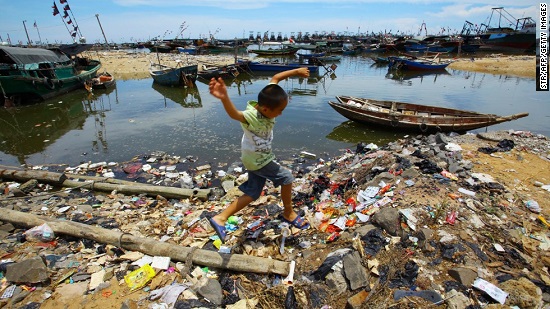
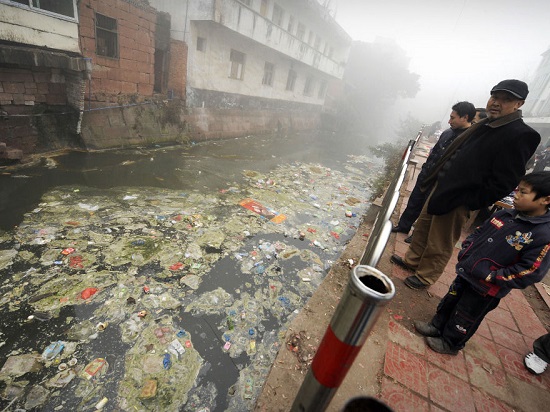
2. The environmental degradation in the developing-world autocracies which welcomed the poisoning of their water, soil and air as "growth."

3. The inherent fragility of long, sole-source supply chains

4. Two generations of wage suppression as American workers were forced to compete with a billion workers willing to work for low, insecure wages as "better than nothing.'

5. Soaring wealth and income inequality as the "winners" of dependency skimmed trillions in profits as the quality of goods and services plummeted and wages stagnated.

No worries, pal, here's a minimum wage job on my $100 million yacht.

6. The cost of depending on distant sources for essentials.

The unspoken context of dependency on distant sources is that wasting resources is considered America's birthright. Since we gave up making essentials as a waste of time, now we're consumers, and so it's our "right" to waste as much as we want: we waste 40% of our food, energy, water, healthcare spending, etc.--and we get real huffy and defensive when this reality is pointed out: it's our "right" to waste as much as want and not have to pay any price for that squandering.

The assumption is the rest of the world exists to provide us stuff to waste. We now have a Landfill Economy: we buy low-quality goods designed to fail on credit, use the pretty-looking piece of junk until the cheapest component fails and then we dump it in the landfill and buy another--on credit, of course.

Boo-hoo, we ran out out money to waste, so print us up another couple trillion dollars to blow, Jay Powell--and make it snappy.

If you want to build back better, then we're going to have to re-learn how to build quality goods here, not in a distant environmental wasteland. We're going to have to cut our dependency on shoddy components and materials from overseas. We're going to have to incentivize efficiency and durability rather than waste, fraud and profiteering.

The spoiled child screams, "I want more!" The adult understands life is a series of trade-offs. The true cost of our wasteful, fraud-riddled, dependent-on-distant-others Landfill Economy have been hidden because waste is easy (and oh-so profitable) while trade-offs are hard.

It is entirely accurate to say that the U.S. is addicted to waste and distant sources of essentials. Addiction has a very steep price and the withdrawal and recovery is long and painful. There is no magic pill. The one thing we know is the sooner the addict starts the process the sooner the recovery begins.

Becoming dependent is insane. Remaining dependent is even more insane. I lay out a pathway to recovery in my book Global Crisis, National Renewal: A (Revolutionary) Grand Strategy for the United States.


My new book is now available at a 10% discount this month: Global Crisis, National Renewal: A (Revolutionary) Grand Strategy for the United States (Kindle $8.95, print $20)

If you found value in this content, please join me in seeking solutions by becoming a $1/month patron of my work via patreon.com.


Recent Videos/Podcasts:

Charles Hugh Smith on The Great Reset Agenda (42 minutes, with Richard Bonugli)


My recent books:

Global Crisis, National Renewal: A (Revolutionary) Grand Strategy for the United States (Kindle $9.95, print $25) Read Chapter One for free (PDF).

A Hacker's Teleology: Sharing the Wealth of Our Shrinking Planet (Kindle $8.95, print $20, audiobook $17.46) Read the first section for free (PDF).

Will You Be Richer or Poorer?: Profit, Power, and AI in a Traumatized World
(Kindle $5, print $10, audiobook) Read the first section for free (PDF).

Pathfinding our Destiny: Preventing the Final Fall of Our Democratic Republic ($5 Kindle, $10 print, ( audiobook): Read the first section for free (PDF).

The Adventures of the Consulting Philosopher: The Disappearance of Drake $1.29 Kindle, $8.95 print); read the first chapters for free (PDF)

Money and Work Unchained $6.95 Kindle, $15 print)
Read the first section for free


Become a $1/month patron of my work via patreon.com.


NOTE: Contributions/subscriptions are acknowledged in the order received. Your name and email remain confidential and will not be given to any other individual, company or agency.

Thank you, Beki H. ($50), for your monumentally generous contribution to this site -- I am greatly honored by your steadfast support and readership.


Thank you, Paul G. ($50), for your marvelously generous contribution to this site -- I am greatly honored by your support and readership.


Thank you, Teri A. ($5/month), for your superbly generous pledge to this site -- I am greatly honored by your support and readership.


Thank you, Norman A. ($20), for your much-appreciated generous contribution to this site -- I am greatly honored by your support and readership.

Read more...

Terms of Service

All content on this blog is provided by Trewe LLC for informational purposes only. The owner of this blog makes no representations as to the accuracy or completeness of any information on this site or found by following any link on this site. The owner will not be liable for any errors or omissions in this information nor for the availability of this information. The owner will not be liable for any losses, injuries, or damages from the display or use of this information. These terms and conditions of use are subject to change at anytime and without notice.

RE: European Union AI Act, and Our Use of Generative AI Tools and Agents Policy

All text on this site is composed by Charles Hugh Smith or by a credited guest-author. No Generative AI Tools are used in the composition / writing of any text or graphic content created by Charles Hugh Smith. This site deploys no AI agents or generative AI tools. This site is not responsible for the disclosures, use or non-use of AI agents or generative AI tools in advertisements displayed by Investing Channel or other ad placement services.

Audio files generated by text-to-audio transcription tools are identified as such.

Our Privacy Policy:

Correspondents' email is strictly confidential. This site does not collect digital data from visitors or distribute cookies. Advertisements served by third-party advertising networks such as Investing Channel may use cookies or collect information from visitors for the purpose of Interest-Based Advertising; if you wish to opt out of Interest-Based Advertising, please go to Opt out of interest-based advertising (The Network Advertising Initiative) If you have other privacy concerns relating to advertisements, please contact advertisers directly.

PRIVACY NOTICE FOR EEA INDIVIDUALS

This section covers disclosures on the General Data Protection Regulation (GDPR) for users residing within EEA only. GDPR replaces the existing Directive 95/46/ec, and aims at harmonizing data protection laws in the EU that are fit for purpose in the digital age. The primary objective of the GDPR is to give citizens back control of their personal data. Please follow the link below to access InvestingChannel's General Data Protection Notice.
https://stg.media.investingchannel.com/gdpr-notice/

Notice of Compliance with The California Consumer Protection Act

This site does not collect digital data from visitors or distribute cookies. Advertisements served by a third-party advertising network (Investing Channel) may use cookies or collect information from visitors for the purpose of Interest-Based Advertising. If you do not want any personal information that may be collected by third-party advertising to be sold, please follow the instructions on this page: Do Not Sell My Personal Information.

Regarding Cookies:

This site does not collect digital data from visitors or distribute cookies. Advertisements served by third-party advertising networks such as Investing Channel may use cookies or collect information from visitors for the purpose of Interest-Based Advertising; if you wish to opt out of Interest-Based Advertising, please go to Opt out of interest-based advertising (The Network Advertising Initiative) If you have other privacy concerns relating to advertisements, please contact advertisers directly.

Our Commission Policy:

Though I earn a small commission on Amazon.com books and gift certificates and gold (BullionVault) purchased via links on my site, I receive no fees or compensation for any other non-advertising links or content posted on my site.

Copyright Notice:

All original images (Drawings and Photographs), text (essays, books and works of fiction), audio and video recordings, musical compositions, graphic design, graphic design elements and HTML coding on this site are the copyrighted work of Charles Hugh Smith unless otherwise credited or noted. They are published as information for the private use of site visitors, and any reproduction or redistribution of this content or coding in any media in any format or distribution channel (text, audio, video/film, web) without the written permission of the copyright holder is strictly prohibited. All rights in all media reserved globally.

  © Blogger templates Newspaper III by Ourblogtemplates.com 2008

Back to TOP