

Wednesday, January 11, 2023

What's Behind the Global Erosion of Civil Liberties, Privacy and Property Rights?

The second essential step is to recognize how the spectacles of "news" and entertainment distract our attention from this erosion of basic rights.

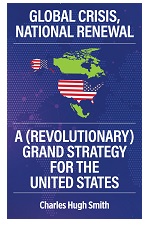
Hierarchical power structures like city-states arose as problem-solving solutions, not just for the elites who benefited from the concentration of wealth and power but for the citizenry. This dynamic underpins the analysis presented in my recent book Global Crisis, National Renewal: when nation-states and global hierarchies no longer solve the key problems of their populaces, they dissolve and are replaced by some new arrangement.

It's easy to see how hierarchies benefit the leaders / elites at the top, but there's always a trade-off to the populace ceding power/control to elites: we will cede control over our lives in exchange for benefits we cannot gain by ourselves, starting with security from invasion and starvation, i.e. the existential threats posed by Nature and other human organizations.

Over time, as energy surpluses and knowledge increased, city-states aggregated into nation-states and empires. These larger organizations were able to solve problems on a larger scale than city-states.

When these entities could no longer solve existential problems (surpluses diminished, elites failed to provide successful leadership, etc.), they eroded and then collapsed, and were replaced with some other more successful organizational arrangement.

Over time, the citizenry of some regions began expanding the benefits nation-states and their elites were expected to provide in exchange for power: the state was expected to secure the rights to individuals' property and various civil liberties relating to the free exchange of ideas and knowledge, freedom of worship, and having a say in national decisions.

Globally, these basic human rights are being eroded by state-elite over-reach and consolidation of power beyond what the citizenry agreed upon. For example, the citizenry ceded power to the state to protect individuals' privacy from the surveillance and information-gathering of both the state and private interests.

As Richard Bonugli and I discuss in our podcast on Eroding Civil Liberties and Property Rights, these privacy statutes are still on the books but they are routinely disregarded by both state agencies and private-sector interests with little functional enforcement by state agencies tasked with protecting the citizens' rights to privacy.

Big Tech routinely harvests private data for profit with little oversight, state agencies collect private data beyond their mandated scope and mobile phones gather private information which others manage to collect or access.

Property rights are also being eroded. Civil forfeiture enables local and national governments to expropriate individuals' private property without due process, in effect declaring them guilty and effecting punishment (taking their money/property) and then forcing them to prove their innocence via a lengthy, costly, Kafkaesque process.

War by other means now includes sanctions and expropriation of individuals' assets, not just the assets of other states or state entities (central banks, state-owned corporations, etc.)

What is driving this global erosion of the most basic civil liberties and property rights? As I describe in my book Resistance, Revolution, Liberation, all states share the same ontology, which is to respond to any threats or challenges by increasing their reach and control.

In other words, all states share the same teleological Prime Directive: always expand the state's control and power. No state has the institutional memory or means to reduce the state's reach, control or power.

The only limit on state expansion is the citizenry's resistance to the loss of civil liberties, property rights and having a say in decisions which affect the entire citizenry. If the citizenry do nothing to protect their rights as individuals and communities, the state will nibble away at these until they exist only in name, not in the real world.

The first essential step is to recognize the erosion as real and consequential. Richard and I do our best to further this in our podcast Charles Hugh Smith on Eroding Civil Liberties and Property Rights (31:35 min).

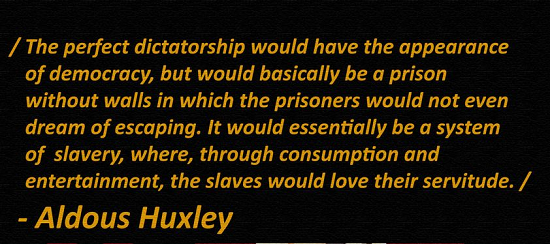
The second essential step is to recognize how the spectacles of "news" and entertainment distract our attention from this erosion of basic rights. Before we know it, we're in prisons without bars and grateful to get a questionnaire about how we like the torture (i.e. the "entertainment").


My new book is now available at a 10% discount ($8.95 ebook, $18 print): Self-Reliance in the 21st Century.

Read the first chapter for free (PDF)

Read excerpts of all three chapters

Podcast with Richard Bonugli: Self Reliance in the 21st Century (43 min)


My recent books:

The Asian Heroine Who Seduced Me (Novel) print $10.95, Kindle $6.95 Read an excerpt for free (PDF)

When You Can't Go On: Burnout, Reckoning and Renewal $18 print, $8.95 Kindle ebook; audiobook Read the first section for free (PDF)

Global Crisis, National Renewal: A (Revolutionary) Grand Strategy for the United States (Kindle $9.95, print $24, audiobook) Read Chapter One for free (PDF).

A Hacker's Teleology: Sharing the Wealth of Our Shrinking Planet (Kindle $8.95, print $20, audiobook $17.46) Read the first section for free (PDF).

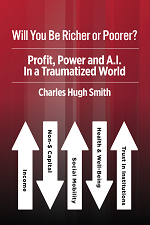
Will You Be Richer or Poorer?: Profit, Power, and AI in a Traumatized World
(Kindle $5, print $10, audiobook) Read the first section for free (PDF).

The Adventures of the Consulting Philosopher: The Disappearance of Drake (Novel) $4.95 Kindle, $10.95 print); read the first chapters for free (PDF)

Money and Work Unchained $6.95 Kindle, $15 print)
Read the first section for free


Become a $1/month patron of my work via patreon.com.


NOTE: Contributions/subscriptions are acknowledged in the order received. Your name and email remain confidential and will not be given to any other individual, company or agency.

Thank you, Patricia P. ($54), for your supremely generous contribution to this site -- I am greatly honored by your support and readership.


Thank you, Gary W. ($10.80), for your most generous contribution to this site -- I am greatly honored by your support and readership.

Read more...

Monday, January 09, 2023

What if the "Black Swan" of 2023 Is the Fed Succeeds?

If the Fed succeeding is a "Black Swan," bring it on.

What if the "Black Swan" of 2023 is the Federal Reserve succeeds? Two stipulations here:

1. "Black Swan" is in quotes because the common usage has widened to include events that don't match Nassim Taleb's original criteria / definition of black swan; the term now includes events considered unlikely or that are off the radar screens of both the media and the alt-media.

2. The definition of "Fed success" is not as simple as the media and the alt-media present it.

In the conventional telling, the Fed made a policy mistake in keeping interest rates and quantitative easing (QE) in place for too long, and now it's made a policy mistake in reversing those policies. Huh? So ZIRP/QE was a policy mistake, OK, we get that. But reversing those policy mistakes is also a policy mistake? Then what isn't a policy mistake? Doing nothing? But wait, isn't "doing nothing" maintaining ZIRP/QE or ZIRP/QE Lite?

This narrative makes no sense.

The other conventional narrative has the Fed's policy mistake as tightening financial conditions, a.k.a. reversing ZIRP/QE, too much too quickly, as this will cause a recession. OK, we get the avoidance of recession is considered "a good thing," but aren't recessions an essential cleansing of excessive debt and speculation, i.e. an essential part of the business cycle without with bad debt, zombies and malinvestments build up to levels that threaten the stability of the entire system?

Yes, recessions are an essential part of the business cycle. So avoiding recessions is systemically disastrous. So according to this narrative, the Fed should "do whatever it takes" to avoid recession, even though a long-overdue recession is desperately needed to cleanse the deadwood, bad debt, zombie enterprises and speculative excesses from the system.

So this narrative is also nonsense.

A favored narrative of the alt-media is that debt levels are too high and the Fed jacking up rates will crush the economy so badly it will usher in Depression and TEOTWOWKI (the end of the world as we know it). OK, we get that debt service (interest payments) rising will pressure households, enterprises and governments, but again, isn't the discipline of capital actually costing something an important feedback in a healthy economy?

The correct answer is yes. Without the discipline imposed by capital actually costing something meaningful, then you end up with the orgy of borrowing, malinvestment, corruption and speculative excess that is currently undermining the long-term stability and vitality of our economy.

So this narrative is also nonsense. Fearing the cost of capital might crush excessive borrowing, malinvestment, corruption and speculation is to cheer on the collapse of an economy hollowed out by the near-zero cost of capital.

If higher rates disintegrate zombies (entities living off reducing debt service by refinancing debt at lower rates), that's a good thing, not a bad thing. If marginal borrowers who were going to default anyway can no longer borrow more, that's also a good thing. If malinvestments that only made sense with zero-cost capital are no longer funded, that's a good thing, not a bad thing.

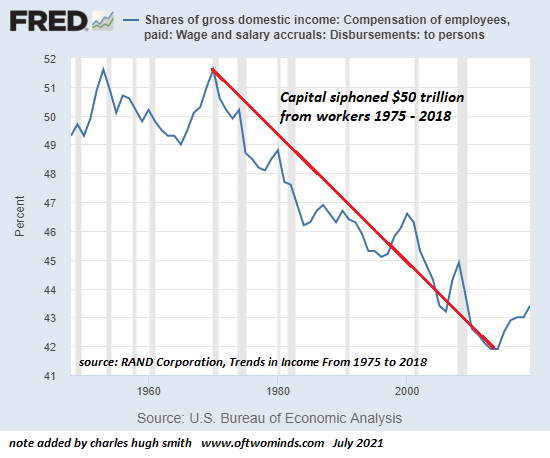
Another narrative has the Fed tightening financial conditions with the intention of destroying the labor market as the means to reduce inflation. OK, we get that higher wages are increase the costs of employers, but what about the past 45 years of wage suppression (See chart below) during which capital siphoned $45 trillion off of labor?

What if inflation is being driven by more than wages snapping back from 45 years of suppression imposed by financialization and globalization? What if what's driving inflation isn't wages but the reversal of the gross distortions created by hyper-financialization and hyper-globalization?

Put another way: maybe the Fed isn't as blind to the sources of wages rising (demographics, etc.) as many think. Maybe the Fed sees a strong labor market and rising wages for what they are, good things, not bad things.

Summing up: the hysteria about a recession is completely misplaced. Recessions--of a certain kind, we must stipulate-- are an essential part of a healthy business cycle, and once this is understood, then we should be cheering for a recession of the kind that imposes desperately needed discipline on an economy being crippled by the excesses triggered by zero-cost capital and excessive debt / leverage / speculation.

Another popular narrative has the US dollar going to zero sooner rather than later as it's replaced by multipolar currencies and arrangements. OK. we get the advantages of a multipolar world and competing currencies / payment schemes--competition is a good thing when it's transparent and everyone has to follow the same rules--but aren't we missing something important about currencies here?

There's a funny thing called interest. When you buy a bond issued by a sovereign state treasury, that bond pays the owner interest denominated (as a general rule) in the sovereign state's currency.

As a general rule, higher interest is better than near-zero interest. The higher the interest rate, the more moolah the bond owner earns.

The potential spoiler is risk: if the sovereign state defaults on that beautiful high-interest-rate bond, then much or all of the capital invested in the bond is lost. That's a bad thing. If the sovereign state's currency drops in purchasing power (i.e. it buys progressively less oil, grain, semiconductors, etc. per unit of currency), that's also a bad thing because a 10% drop in purchasing power vis a vis other currencies and commodities not only offsets the 5% interest, it reduces the value (as measured by purchasing power) of the capital.

So higher interest is only of interest (heh) if the risk of default and currency devaluation is low. This brings up another popular narrative: a currency losing value vis a vis other currencies is a good thing because it (supposedly) makes our exported goods and services more attractive because they're now cheaper.

Wait a minute. So reducing the purchasing power of everyone's money by devaluing the nation's currency is a good thing because a handful of exporters might benefit? But since the value of the currency is dropping, how much will they actually gain when measured in purchasing power? And what about the 95% of the people and economy who become poorer as their currency loses purchasing power?

This narrative is also nonsense. A stronger currency is a good thing for the vast majority of the citizenry and the economy because it magically increases the purchasing power of everyone's money. A devalued currency is a catastrophe, not a good thing. A currency that's gaining purchasing power is a good thing.

If we put this all together, we see how the Fed might well succeed, with success defined thusly:

1. the labor market doesn't collapse and wages continue rising.

2. A much-needed cleansing of distorting excesses due to zero-cost capital has already taken place over the past year.

3. The higher yields on US Treasury bonds and private-sector debt has strengthened the US dollar, increasing the purchasing power of everyone using / holding dollars, i.e. 100% of the American populace, and everyone who owns dollar-denominated assets globally.

Measuring "recession" by the stock market, housing or GDP is misleading. Assets inflated to bubble heights by zero-cost credit must be deflated by pushing the cost of capital high enough to impose much-needed discipline. Speculation / malinvestment driven by hyper-financialization and hyper-globalization are destructive to the long-term stability and health of the economy and nation and these must be deflated along with the asset bubbles.

If we measure "recession" by the success of reimposing some much-needed discipline via tighter financial conditions and higher rates of interest, we get a much different definition of success. Ironically, the stock market will actually do much better once the excesses of zero-cost capital have been wrung out of the system.

By raising rates aggressively, the Fed has wrung much of this excess out of the system, without many even noticing. By telegraphing the end of The Fed Put, zero-cost capital and excessive stimulus, the Fed has put the world on notice that a weaker dollar and an economy based on speculative malinvestment is no longer "the safe bet."

That is the definition of success if we care to restore stability and vigor.

It's hard not to notice the emotional desire of many observers for the Fed to fail. Many object (for good reasons) that the Fed even exists. (I am sympathetic to this view.) Others hope the system collapses in a heap because it so richly deserves it, or because it should collapse for one reason or another.

We can understand the emotional satisfaction to be derived from the all-powerful Fed failing, but if we set aside the many delights of schadenfreude and focus on the long-term stability and vitality of our economy, society and nation, we should cheer aggressively higher rates which are kept high, come what may, as the necessary cost of reimposing desperately needed discipline via higher rates and tightening financial conditions, and a equally needed defense of the nation's currency.

If the Fed succeeding is a "Black Swan," bring it on.

Hat tip to Santiago Capital for this tweet: Ever stop to think that the Black Swan we all know is out there...is the Fed pulling this off?


My new book is now available at a 10% discount ($8.95 ebook, $18 print): Self-Reliance in the 21st Century.

Read the first chapter for free (PDF)

Read excerpts of all three chapters

Podcast with Richard Bonugli: Self Reliance in the 21st Century (43 min)


My recent books:

The Asian Heroine Who Seduced Me (Novel) print $10.95, Kindle $6.95 Read an excerpt for free (PDF)

When You Can't Go On: Burnout, Reckoning and Renewal $18 print, $8.95 Kindle ebook; audiobook Read the first section for free (PDF)

Global Crisis, National Renewal: A (Revolutionary) Grand Strategy for the United States (Kindle $9.95, print $24, audiobook) Read Chapter One for free (PDF).

A Hacker's Teleology: Sharing the Wealth of Our Shrinking Planet (Kindle $8.95, print $20, audiobook $17.46) Read the first section for free (PDF).

Will You Be Richer or Poorer?: Profit, Power, and AI in a Traumatized World
(Kindle $5, print $10, audiobook) Read the first section for free (PDF).

The Adventures of the Consulting Philosopher: The Disappearance of Drake (Novel) $4.95 Kindle, $10.95 print); read the first chapters for free (PDF)

Money and Work Unchained $6.95 Kindle, $15 print)
Read the first section for free


Become a $1/month patron of my work via patreon.com.


NOTE: Contributions/subscriptions are acknowledged in the order received. Your name and email remain confidential and will not be given to any other individual, company or agency.

Thank you, Emerson F. ($108), for your outrageously generous contribution to this site -- I am greatly honored by your support and readership.


Thank you, Gunnar G. ($5/month), for your marvelously generous pledge to this site -- I am greatly honored by your steadfast support and readership.

Read more...

Sunday, January 08, 2023

Who Will Save Us From Ourselves?

We have the capacity to learn from previous civilization's errors--rising inequality, hubris, over-reach, decay of production and trade, parasitic elites, and so on--yet we go right ahead and repeat those same errors.

After listening to my explanation of the many cycles human civilizations track first to glory and then to decay, podcast host Tommy Carrigan asked a key question: why don't we stop ourselves from self-destructing? Tommy and I had a free-range conversation on this and related topics (plus a lot of laughs) that you can listen to here: UFOs & Cycles of Humanity (1:36 hrs)

We have the capacity to learn from previous civilization's errors--rising inequality, hubris, over-reach, decay of production and trade, parasitic elites, and so on--yet we go right ahead and repeat those same errors.

What explains our inability to learn from history and take corrective actions by maintaining the dynamics of adaptive advances? (Transparent governance, the sharing of knowledge, incentivizing trade and enterprise, competition, stable money, rule of law / fairness, social mobility and limits on elites' plundering / exploitation.)

Why do we allow the decay, over-reach, greed, hubris, institutional sclerosis and parasitic elites that lead to collapse gain the upper hand time and again? Why do we not act on what can be learned from history?

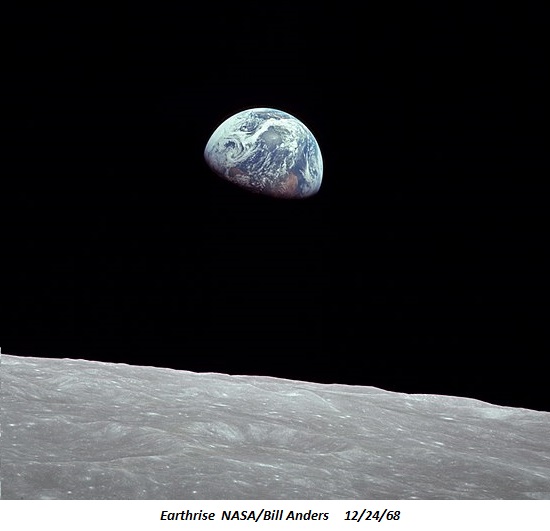
For those of us steeped in science fiction and the study of AI, this question inevitably leads to discussions of the potential immutability of historic cycles (Asimov's Foundation Trilogy, which posited that cycles could not be annulled but the decay/collapse phase could be reduced in duration), the deus ex machina of contact with extraterrestrial civilizations and the potential of super-intelligent AI to save us from ourselves.


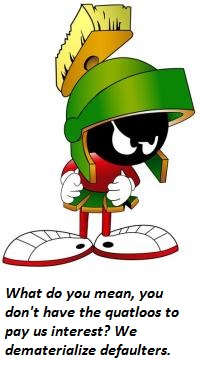
Longtime readers know that I often refer to the Martian Central Bank as one potential savior of our own financial excesses--the credit/speculative cycle of growth and decay / authenticity and artifice that we repeat with sobering regularity (Kondratieff cycle, etc.).

In my treatment, the Martian Central Bank is rather unforgiving of debtors who can't or won't pony up the quatloos due in interest. As Tommy pointed out, we tend to have a very either/or expectation of aliens: either they come to destroy us (the Earthling model of colonization and/or conquest) or as wise saviors.

I couldn't stop laughing once Tommy posited the aliens might come expecting us to save them with our great technology. ("You have fusion energy, right?" "Well, uh, not quite...")

As for super-intelligent AI, we discussed the key speculative questions, many of which boil down to who's watching the watchers?

I remain skeptical of current AI's potential to resolve humanity's cyclical turns of hubris, excess and karma, topics I've discussed in three of my books:

Will You Be Richer or Poorer?: Profit, Power and A.I. in a Traumatized World

A Hacker's Teleology: Sharing the Wealth of Our Shrinking Planet

A Radically Beneficial World: Automation, Technology and Creating Jobs for All

I see potential for AI to reduce the human biases that generate so much unfairness and inequality, but find the expectation that humanity can look forward to sitting around doing essentially no work as not only unlikely but disconnected from the real world.

In other words, it looks like we're going to have to save ourselves without the aid of wise aliens or super-AI. We're going to have to reverse the decay, corruption, artifice, hubris, over-reach and sclerosis ourselves, if not by reformation then by opting out / let it rot.

There is much more in our discussion UFOs & Cycles of Humanity (1:36 hrs). What I like about our conversation is that it can be taken as two guys having a good time spouting speculative nonsense or as two guys exploring the limits of human knowledge and endeavor.

I've been fortunate to be a guest on numerous podcasts and it's rare that I've been invited to indulge in the sort of speculation that comes naturally to my (generally fevered) mind. Thank you, Tommy, for the no-boundaries conversation and the good humor. Tommy's extensive podcast archives can be found here: Tommy's podcast.

Looks like we're on our own--at least until the enforcers of the Martian Central Bank show up demanding their quatloos--or else....

https://rumble.com/c/TPC

My new book is now available at a 10% discount ($8.95 ebook, $18 print): Self-Reliance in the 21st Century.

Read the first chapter for free (PDF)

Read excerpts of all three chapters

Podcast with Richard Bonugli: Self Reliance in the 21st Century (43 min)


My recent books:

The Asian Heroine Who Seduced Me (Novel) print $10.95, Kindle $6.95 Read an excerpt for free (PDF)

When You Can't Go On: Burnout, Reckoning and Renewal $18 print, $8.95 Kindle ebook; audiobook Read the first section for free (PDF)

Global Crisis, National Renewal: A (Revolutionary) Grand Strategy for the United States (Kindle $9.95, print $24, audiobook) Read Chapter One for free (PDF).

A Hacker's Teleology: Sharing the Wealth of Our Shrinking Planet (Kindle $8.95, print $20, audiobook $17.46) Read the first section for free (PDF).

Will You Be Richer or Poorer?: Profit, Power, and AI in a Traumatized World
(Kindle $5, print $10, audiobook) Read the first section for free (PDF).

The Adventures of the Consulting Philosopher: The Disappearance of Drake (Novel) $4.95 Kindle, $10.95 print); read the first chapters for free (PDF)

Money and Work Unchained $6.95 Kindle, $15 print)
Read the first section for free


Become a $1/month patron of my work via patreon.com.


NOTE: Contributions/subscriptions are acknowledged in the order received. Your name and email remain confidential and will not be given to any other individual, company or agency.

Thank you, Carol J. ($60), for your magnificently generous contribution to this site -- I am greatly honored by your support and readership.


Thank you, Duane S. ($25), for your marvelously generous contribution to this site -- I am greatly honored by your steadfast support and readership.

Read more...

Thursday, January 05, 2023

Who Would Benefit from a Severe Global Recession?

As painful as this liquidation and repricing of risk is for borrowers and lenders, those without debt, those with cash and those with essential skills that are in demand regardless of boom or bust will all benefit.

Who would benefit from a severe global recession? The typical answer is "no one," as a drop in economic activity is assumed to hurt everyone. But it's not quite that simple; there are silver linings for some in all those dark clouds.

When demand for energy plummets, the price of oil tends to drop dramatically. There are several reasons for this:

1. Price is set on the margins so a modest decline in demand can trigger an outsized drop in price. In the 2008-09 timeframe, oil fell from $147/barrel to the $30s on a modest decline in demand.

2. While oil producers always announce production cuts to maintain high process, they are under pressure to offset plummeting income by pumping more oil, not less.

3. Speculative capital floods into oil when prices are rising and exits when prices are dropping. This financialization of the energy markets exacerbates price movements up and down.

Dramatic declines in oil hurt producers and benefit consumers. As demand for goods and services declines, suppliers and retailers must trim prices and profit margins to maintain market share. This deflationary pressure benefits consumers.

As marginal businesses close their doors and marginal renters move out of high-cost rentals, landlords must reduce rents to avoid the eventual result of mass vacancies, i.e. bankruptcy. Reductions in rents benefit consumers.

Marginal homeowners and absentee landlords slide into insolvency and are either forced to sell their homes and real estate or their lenders foreclose on their mortgages and sell the lender-owned properties to reduce their losses. These forced sales reduce the price of these assets, benefiting those with cash who can now afford to buy assets that were unaffordable in the pre-recession bubble.

A deep recession also shifts global capital flows. As a general rule, oil/gas exporters and manufacturing exporters pile up excess savings (trade surpluses) by selling energy and goods to importing nations running trade deficits which are funded by borrowing (debt).

The exporting nations need some place to invest or park their excess capital and buying the importers' debt yields interest income. This excess capital can also be placed in reserves (gold or foreign currencies), invested in offshore real estate, stocks, enterprises, etc., low-utility "bridges to nowhere" in the domestic economy or malinvested in grandiose malls, stadiums, palaces, etc.

It can also be spent in social welfare or high-technology programs, etc.

A severe global recession upends these capital flows. As demand craters, exporters' surpluses drop precipitously. Rather than having surplus capital to spend/invest, the exporting nations must sell assets or tap reserves to fund the programs that the domestic populace views as their birthright.

As demand craters, importing nations import less, reducing their borrowing needs. But since the surplus capital of exporters has plummeted, the debtor nations find there are fewer buyers of their debt. This supply-demand imbalance pushes interest rates / bond yields higher, as importing / debtor nations must compete for the shrinking pool of capital sloshing around the global economy.

As marginal private-sector and public-sector borrowers default, lenders tighten lending guidelines to reduce the risk of losing money on debt offered to potentially marginal borrowers. Those seeking loans find it more costly to borrow as credit tightens, and those with cash find their capital earns a higher return as capital becomes more scarce.

These dynamics typically generate self-reinforcing feedback loops. As defaults rise, forced selling then triggers additional defaults as prices continue dropping. Heavily indebted households, enterprises and nations that suffer declines in income default on their debt, forcing a repricing of risk throughout the global credit market.

Prices that the unwary reckon have hit bottom continue to drop as the self-reinforcing dynamic of liquidation and repricing of risk feeds on itself.

As painful as this liquidation and repricing of risk is for borrowers and lenders, those without debt, those with cash and those with essential skills that are in demand regardless of boom or bust will all benefit. Those burdened with high costs and promises that cannot be kept will be liquidated. Those with low costs and few promises have the means to adapt to changing conditions.

In terms of natural selection, a severe global recession puts tremendous selective pressure on every participant on every scale: households, small businesses, global corporations, nations, alliances and empires. The least resilient won't have the means to adapt and they will default/dissolve. The more resilient will have the means to tighten their belts and survive. The most adaptable will not just survive, they will emerge stronger due to their capacity for rapid, successful adaptability.

What it takes to not just survive but emerge stronger is the topic of my two books Global Crisis, National Renewal: A (Revolutionary) Grand Strategy for the United States and Self-Reliance in the 21st Century.


My new book is now available at a 10% discount ($8.95 ebook, $18 print): Self-Reliance in the 21st Century.

Read the first chapter for free (PDF)

Read excerpts of all three chapters

Podcast with Richard Bonugli: Self Reliance in the 21st Century (43 min)


My recent books:

The Asian Heroine Who Seduced Me (Novel) print $10.95, Kindle $6.95 Read an excerpt for free (PDF)

When You Can't Go On: Burnout, Reckoning and Renewal $18 print, $8.95 Kindle ebook; audiobook Read the first section for free (PDF)

Global Crisis, National Renewal: A (Revolutionary) Grand Strategy for the United States (Kindle $9.95, print $24, audiobook) Read Chapter One for free (PDF).

A Hacker's Teleology: Sharing the Wealth of Our Shrinking Planet (Kindle $8.95, print $20, audiobook $17.46) Read the first section for free (PDF).

Will You Be Richer or Poorer?: Profit, Power, and AI in a Traumatized World
(Kindle $5, print $10, audiobook) Read the first section for free (PDF).

The Adventures of the Consulting Philosopher: The Disappearance of Drake (Novel) $4.95 Kindle, $10.95 print); read the first chapters for free (PDF)

Money and Work Unchained $6.95 Kindle, $15 print)
Read the first section for free


Become a $1/month patron of my work via patreon.com.


NOTE: Contributions/subscriptions are acknowledged in the order received. Your name and email remain confidential and will not be given to any other individual, company or agency.

Thank you, Tim M. ($15), for your most generous contribution to this site -- I am greatly honored by your support and readership.


Thank you, John D. ($20), for your marvelously generous contribution to this site -- I am greatly honored by your steadfast support and readership.

Read more...

Wednesday, January 04, 2023

How Easy Is It To Become Middle Class?

If we want social / economic renewal, we have to make it easy to climb the ladder to middle class security for anyone willing to adopt the values and habits of thrift, prudence, negotiation, and hard work.

Let's stipulate that the rise of the middle class is the core driver of expansion, innovation and democracy and the decay of the middle class is the core source of economic / political / social disorder and decline.

The pathway to middle class security has profound social, political and economic consequences. As people acquire means, they can afford more education, and they have a stake in the system that needs to be defended / advocated. This advocacy nurtures a diversity of views, democratic / legal institutions and a free press.

As the book The Inheritance of Rome detailed, the egalitarian aspects of Roman rule continued to influence everyday life for hundreds of years.

It took centuries for feudalism to eradicate these holdovers from Roman rule (for example, peasant ownership of land).

The rise of ths middle class broke the stranglehold of feudalism by encouraging free movement of labor and capital, and strengthening weak central governments to the point that feudal fiefdoms answered to the central government again, as in the Roman and Carolingian eras.

The key factor that determines the rise of a middle class is the relative ease of laborers becoming middle class. In the classical Roman era, freed slaves often ended up doing very well for themselves and becoming middle class, as the class boundaries were porous enough to enable craftworkers and small merchants to improve their lot in life.

This boils down to this question: are thrift, prudence, negotiation, and hard work enough to transform a family from penury to middle class?

If the answer is "yes," then the ladder to middle class security is open to anyone who adopts these values / habits.

If the answer is "no," then the ladder to middle class security is not open to everyone, and the economy stagnates.

Broadly speaking, virtually anyone who rigorously adopted thrift, prudence, negotiation, and hard work in the fifty years from 1946 to 1995 could (once they married and gained a two-income household) eventually afford a family and a stake in the system--a house and/or small business, a pension, etc.

Once financialization and globalization rose to dominance and distorted the economy with increasing wealth and income inequality ("winner take most"), this was no longer the case.

Workers of average skill, motivation and wages who adopt thrift, prudence, negotiation, and hard work can no longer afford a family or a stake in the system--at least in high-cost, enormously unequal locales.

This is true not just of the U.S. but globally.

This reality has fueled two trends of decay: 1) a dependence on speculation as the only means to "get ahead" and 2) "laying flat" / "let it rot"--giving up on marrying, having a family and acquiring a stake in the system.

Once these aspirations are only available to those with the right connections or extraordinary drive / talent, society and the economy decay and collapse under the weight of inequality--an inequality defended by those who made it to the top and want to preserve the status quo as it is.

This is the driver of decay and collapse: once the elites devote themselves to suppressing adaptations and defending extremes of wealth-income-power inequality that benefit them, the system loses the adaptability that arises from a broad-based middle class.

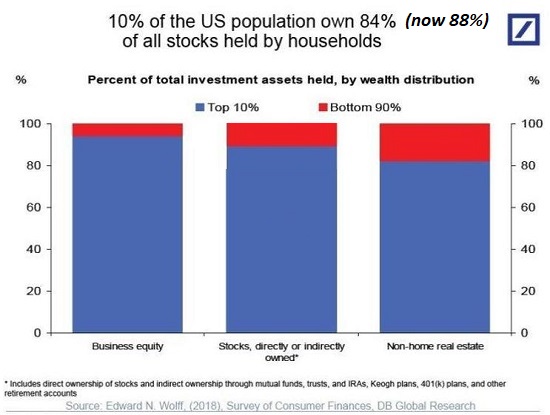
The top 10% want the status quo to continue as is, even as the bottom 90% fall behind. When enough of the bottom 90% decide to "let it rot," the entire structure collapses under its own weight.

If we want social / economic renewal, we have to make it easy to climb the ladder to middle class security for anyone willing to adopt the values and habits of thrift, prudence, negotiation, and hard work. The dominance of a class of self-interested insiders and rentiers precludes this, as this class will expend the last of its resources defending the corrupting inequality that has enriched them so gloriously.

This essay was drawn from a weekly Musings Report sent exclusively to subscribers and patrons at the $5/month ($50/year) and higher level. Thank you, patrons and subscribers, for supporting my work and free website.


My new book is now available at a 10% discount ($8.95 ebook, $18 print): Self-Reliance in the 21st Century.

Read the first chapter for free (PDF)

Read excerpts of all three chapters

Podcast with Richard Bonugli: Self Reliance in the 21st Century (43 min)


My recent books:

The Asian Heroine Who Seduced Me (Novel) print $10.95, Kindle $6.95 Read an excerpt for free (PDF)

When You Can't Go On: Burnout, Reckoning and Renewal $18 print, $8.95 Kindle ebook; audiobook Read the first section for free (PDF)

Global Crisis, National Renewal: A (Revolutionary) Grand Strategy for the United States (Kindle $9.95, print $24, audiobook) Read Chapter One for free (PDF).

A Hacker's Teleology: Sharing the Wealth of Our Shrinking Planet (Kindle $8.95, print $20, audiobook $17.46) Read the first section for free (PDF).

Will You Be Richer or Poorer?: Profit, Power, and AI in a Traumatized World
(Kindle $5, print $10, audiobook) Read the first section for free (PDF).

The Adventures of the Consulting Philosopher: The Disappearance of Drake (Novel) $4.95 Kindle, $10.95 print); read the first chapters for free (PDF)

Money and Work Unchained $6.95 Kindle, $15 print)
Read the first section for free


Become a $1/month patron of my work via patreon.com.


NOTE: Contributions/subscriptions are acknowledged in the order received. Your name and email remain confidential and will not be given to any other individual, company or agency.

Thank you, Jeff L. ($54), for your superlatively generous contribution to this site -- I am greatly honored by you54support and readership.


Thank you, Al S. ($54), for your marvelously generous contribution to this site -- I am greatly honored by your support and readership.

Read more...

Terms of Service

All content on this blog is provided by Trewe LLC for informational purposes only. The owner of this blog makes no representations as to the accuracy or completeness of any information on this site or found by following any link on this site. The owner will not be liable for any errors or omissions in this information nor for the availability of this information. The owner will not be liable for any losses, injuries, or damages from the display or use of this information. These terms and conditions of use are subject to change at anytime and without notice.

RE: European Union AI Act, and Our Use of Generative AI Tools and Agents Policy

All text on this site is composed by Charles Hugh Smith or by a credited guest-author. No Generative AI Tools are used in the composition / writing of any text or graphic content created by Charles Hugh Smith. This site deploys no AI agents or generative AI tools. This site is not responsible for the disclosures, use or non-use of AI agents or generative AI tools in advertisements displayed by Investing Channel or other ad placement services.

Audio files generated by text-to-audio transcription tools are identified as such.

Our Privacy Policy:

Correspondents' email is strictly confidential. This site does not collect digital data from visitors or distribute cookies. Advertisements served by third-party advertising networks such as Investing Channel may use cookies or collect information from visitors for the purpose of Interest-Based Advertising; if you wish to opt out of Interest-Based Advertising, please go to Opt out of interest-based advertising (The Network Advertising Initiative) If you have other privacy concerns relating to advertisements, please contact advertisers directly.

PRIVACY NOTICE FOR EEA INDIVIDUALS

This section covers disclosures on the General Data Protection Regulation (GDPR) for users residing within EEA only. GDPR replaces the existing Directive 95/46/ec, and aims at harmonizing data protection laws in the EU that are fit for purpose in the digital age. The primary objective of the GDPR is to give citizens back control of their personal data. Please follow the link below to access InvestingChannel's General Data Protection Notice.
https://stg.media.investingchannel.com/gdpr-notice/

Notice of Compliance with The California Consumer Protection Act

This site does not collect digital data from visitors or distribute cookies. Advertisements served by a third-party advertising network (Investing Channel) may use cookies or collect information from visitors for the purpose of Interest-Based Advertising. If you do not want any personal information that may be collected by third-party advertising to be sold, please follow the instructions on this page: Do Not Sell My Personal Information.

Regarding Cookies:

This site does not collect digital data from visitors or distribute cookies. Advertisements served by third-party advertising networks such as Investing Channel may use cookies or collect information from visitors for the purpose of Interest-Based Advertising; if you wish to opt out of Interest-Based Advertising, please go to Opt out of interest-based advertising (The Network Advertising Initiative) If you have other privacy concerns relating to advertisements, please contact advertisers directly.

Our Commission Policy:

Though I earn a small commission on Amazon.com books and gift certificates and gold (BullionVault) purchased via links on my site, I receive no fees or compensation for any other non-advertising links or content posted on my site.

Copyright Notice:

All original images (Drawings and Photographs), text (essays, books and works of fiction), audio and video recordings, musical compositions, graphic design, graphic design elements and HTML coding on this site are the copyrighted work of Charles Hugh Smith unless otherwise credited or noted. They are published as information for the private use of site visitors, and any reproduction or redistribution of this content or coding in any media in any format or distribution channel (text, audio, video/film, web) without the written permission of the copyright holder is strictly prohibited. All rights in all media reserved globally.

  © Blogger templates Newspaper III by Ourblogtemplates.com 2008

Back to TOP