

Friday, December 13, 2024

Truth, Beauty and the Unseen Craftsperson

I think of Bill whenever the breeze brings his chimes to life.

Today I want to honor Bill Murath, a friend and fellow craftsperson who recently passed away from AML. (Acute myeloid leukemia). Like the vast majority of those I have come to know through countless emails, Bill and I never met in the physical world, but we bonded in the realms of spirit and craft. Bill was a unique spirit and gifted craftsperson.

Bill was a father, husband, business owner and musician, and in his younger days, a surfer who lived on the North Shore of Oahu and worked in a pizza shop to fund his surfing. I know the North Shore well and when I see a photo of him on his board, in my mind's eye I am swimming beside him.

Bill and I go way back.

When he read my post When an Old Friend Takes Her Own Life (December 1, 2007), he responded by making two wind chimes of craft and beauty, which he mailed to me in remembrance of my dear friend.

That Bill understood my loss and responded by investing his time, skill and artistry in making a gift that continues to enrich my life every day--how can I express my gratitude?

I asked what I could do for him in return, he shrugged. It was a gift. When I asked him to explain how he designed the length of each chime to achieve the various tones, his explanation went over my head.

I've learned to avoid discussing beauty in my public posts because it inevitably draws the ire of those anxious to accuse me of elitism, as the mainstays of American culture are "beauty is in the eye of the beholder," i.e. entirely subjective; "only elites can afford beauty," i.e. fine art / costly objets d'art that serve as signifiers of wealth and status, and "aesthetic sensibility is snobbery," so to recognize beauty is verboten.

This is a misunderstanding of the meaning of craft, which is an expression of truth and beauty that is not subject to fads or opinion.

I too am a craftsperson, but of a different sort than artists like Bill. My craft is purposefully unseen, invisible, as my skill is in doing work that goes unnoticed because it blends in with what is already there.

Bill understood the Tao of craft. If you read Zhuang Zhou (Chuang Tzu in a previous era), you'll find stories of butchers whose blade never dulls because they never hit bone, and masters who catch birds with sticks. These stories reflect that the Tao flows as skills mastered by years of discipline and effort, as the result of experience with unique situations with uncertain solutions--precisely what is beyond the reach of machines and AI, despite overblown claims to the contrary.

Though our culture claims to glorify beauty, it actually glorifies ugliness. This is why it's so verboten to even discuss beauty, for that would inevitably lead to a recognition of the sea of ugliness.

To those imbued with the Tao of craft, there is immutable truth in the materials we work with. This truth is not subjective; we feel it as our second nature. The same holds for beauty: if the work is done right, it has beauty on multiple levels that is not a matter of opinion.

This immutability is offensive to those who claim equal rights to "decide what's true and beautiful." The craftsperson knows from long experience, in a way the opinionated non-master-craftsperson cannot.

A machine can mix pie crust dough, and the result is low quality because there is a craft mastery to a truly wonderful pie crust. The master baker knows just how much water to add by the feel of the dough, which is partly based on the humidity and temperature of the environment. The feeling of rightness cannot be measured by instruments or taught online; it must be acquired by long experience of trial and error in unique circumstances with uncertain solutions and outcomes, what author Donald Schon called "reflection in action."

This training is never complete, of course, but the practitioner reaches a point of natural confidence that the ignorant mistake for pride or superiority. The practitioners sense the truth of the materials and the path to beauty.

My own experiences this year illustrate the point. I replaced several delaminating interior doors in a 50-year old house. I had to trim the doors to fit the opening, drill a hole for the existing lockset, and so on. The tricky part wasn't the carpentry, it was the finish. The existing doors had been "blonded," a process of rubbing white paint over the veneer and quickly wiping it off. The same technique had been applied to the tongue-and-groove redwood wall boards.

The technique looks easy, and it is, unless you're seeking to match an existing set of doors that have aged with time. Then the trick is to know how long to let the paint soak in and when to wipe the excess off so it looks like the older doors. If you wait too long, the paint dries and the finish is uneven. If you wipe it off too soon, then it's visibly lighter than the older doors.

The goal is to replace the doors in such a way that casual observers don't see the new doors as replacements.

In the same house, an old pipe had been removed long ago in the bathroom and the hole had been filled with an ugly wood plug. There is no way anyone could claim this plug was anything but ugly. So I used a couple of tricks and mixed up several shades of paint to match the existing linoleum flooring. The casual observer won't see it.

A spot of dry rot on an exterior window frame turned out to be a fist-sized sponge of rotted wood that included some of the siding, frame, sill and trim. A robot would have opted for the "obvious" solution which was replacing the entire window frame, window and siding--a job that would cost a lot of money. I knew this was unnecessary and so I set the blade depth of our wormdrive Skilsaw and free-handed a surgery which I completed with a hammer and chisel.

Firing up a Skilsaw to free-hand cut away parts of the window sill, frame, trim and siding of a single-wall house demands a certain level of experience, as each such job is unique. It's not a factory environment. The saw weighs 13 pounds, it's threatening to rain so there's a pressing time element, the ground is uneven and the tool is inherently dangerous. A YouTube video isn't going to give you the skill that only experience provides. It boils down to the feel you have for the blade and the wood.

This is the craft. It becomes part of you, a second nature called up as needed, for your hands do the work "all by themselves," without conscious guidance. Your mind isn't wandering, it's observant, but no more than that. You let the work get done by staying out of its way.

Again, the truth is in the materials: you sense the density and soundness of the wood by the feel of the chisel. The beauty is in the invisibility of the repair, which required fashioning three small complex multi-cut pieces of new wood with a chisel and a hacksaw, as the blade is finer than our handsaw.

I think of Bill whenever the breeze brings his chimes to life. My craft is not up to his, but given my 50 years of experience, I can recognize and honor his achievement, and admire the truth and beauty of his craft and life.

I miss you, Bill.

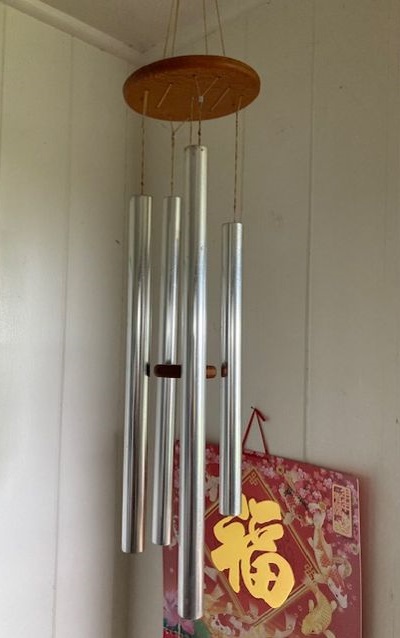
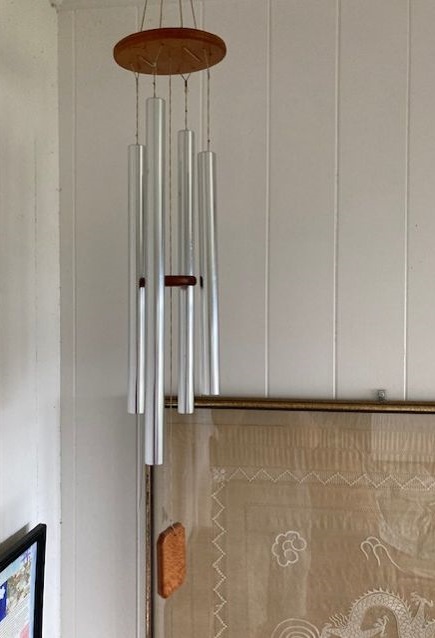
Here are photos of his chimes, and a brief recording of one.

One holds court in a corner of our kitchen, where it catches the tradewind breezes from the dining nook windows. It is a musical "kitchen god" for those familiar with Chinese traditions.


The other holds court in our living room, where it comes to life in the tradewinds wafting through the windows overlooking our yard. That it shares the space with our very old embroidered dragon seems appropriate.


This book helps us understand Bill's level of craft. The Unknown Craftsman: A Japanese Insight into Beauty (1972)


New podcast: Seeking a Culture of Honor and Integrity with Emerson Fersch and Amy LeNoble (59 min)


My recent books:

Disclosure: As an Amazon Associate I earn from qualifying purchases originated via links to Amazon products on this site.

The Mythology of Progress, Anti-Progress and a Mythology for the 21st Century print $18, (Kindle $8.95, Hardcover $24 (215 pages, 2024) Read the Introduction and first chapter for free (PDF)

Self-Reliance in the 21st Century print $18, (Kindle $8.95, audiobook $13.08 (96 pages, 2022) Read the first chapter for free (PDF)

The Asian Heroine Who Seduced Me (Novel) print $10.95, Kindle $6.95 Read an excerpt for free (PDF)

When You Can't Go On: Burnout, Reckoning and Renewal $18 print, $8.95 Kindle ebook; audiobook Read the first section for free (PDF)

Global Crisis, National Renewal: A (Revolutionary) Grand Strategy for the United States (Kindle $9.95, print $24, audiobook) Read Chapter One for free (PDF).

A Hacker's Teleology: Sharing the Wealth of Our Shrinking Planet (Kindle $8.95, print $20, audiobook $17.46) Read the first section for free (PDF).

Will You Be Richer or Poorer?: Profit, Power, and AI in a Traumatized World
(Kindle $5, print $10, audiobook) Read the first section for free (PDF).

The Adventures of the Consulting Philosopher: The Disappearance of Drake (Novel) $4.95 Kindle, $10.95 print); read the first chapters for free (PDF)

Money and Work Unchained $6.95 Kindle, $15 print)
Read the first section for free


Become a $3/month patron of my work via patreon.com.

Subscribe to my Substack for free


NOTE: Contributions/subscriptions are acknowledged in the order received. Your name and email remain confidential and will not be given to any other individual, company or agency.

Thank you, Steve K. ($250), for your beyond-outrageously generous subscription to this site -- I am greatly honored by your steadfast support and readership.


Thank you, Michael M. ($7/month), for your superbly generous subscription to this site -- I am greatly honored by your support and readership.


Thank you, John ($70), for your marvelously generous subscription to this site -- I am greatly honored by your support and readership.


Thank you, Boris B. ($70), for your splendidly generous subscription to this site -- I am greatly honored by your support and readership.

Read more...

Wednesday, December 11, 2024

The Big Shining Lie: We're Better Off Now--No, We're Poorer, Much Poorer

This is proof-positive we're not just poorer now than we were 40 years ago, we're much, much poorer.

Armies of well-paid apologists, apparatchiks and propaganda peddlers--economists, pundits, statisticians, influencers--spend their entire careers pushing a big shining lie; we're more prosperous now than ever before. This is demonstrably false, as the truth--that we're much poorer than we were 40 or 50 years ago--would disrupt the status quo in which the few at the top get to control the narratives and wealth as long as the masses believe the propaganda that we're all better off.

This is the reason why the four-decade collapse of the purchasing power of wages must be papered over with propaganda and gamed statistics. If we accept the reality of our declining standard of living and well-being, then a few reforms will be recognized as insufficient; we'll awaken to the necessity of a Reformation, not just a handful of standard-issue policy tweaks.

Inflation statistics are easily gamed. So are statistics such as median wages. Official inflation is gamed by various statistical tricks (hedonics and what's in the price basket) to understate the real-world decline in purchasing power.

There is only one true measure of prosperity: the purchasing power of an hour's labor / wage. It doesn't matter what the wage or price numbers are, what matters is: how much can you buy with an hour's wage?

Fact: in 1977, it took 2.25 days of work (18 hours) to pay the monthly rent on my studio apartment in the most expensive city in the U.S., Honolulu. In virtually any other city or town, the rent would have been less. I was 23 years old, working as a non-union apprentice carpenter for a small contractor. The pay was a bit above average, but by no means fabulous. I wasn't working at Goldman Sachs. The rent was fair market; it wasn't some special deal offered by a relative.

Since this was a cheap apartment, let's round that up to 3 days of work to pay the monthly rent.

OK, so how many young wage earners today can pay the rent for their own apartment with 3 days' pay? Any hands? OK, the Ivy League MBA working at Goldman Sachs, making mega-six-figures in annual compensation. Any average folks out there paying their rent with 3 days' pay? No?

Today, that would require an hourly wage of $60 to $90 an hour. The median annual wage is around $60,000, around $30/hour--half or a third of what it takes to pay the rent on a studio apartment in a high-cost urban area with 3 days of work.

It's important to understand that I didn't have the only cheap apartment in the city. Most of my friends had similar cheap housing, because there were more nooks and crannies in the housing market and in the economy: more small landlords and lower costs of doing business. One friend rented a converted WW2-era Quonset hut on the edge of an upscale neighborhood. Another lived in an old apartment next to the freeway. Another rented an in-law cottage in a single-family home neighborhood. I rented a wealthy couple's poolside cabana for a year. (Most of the space was filled with their stuff, but the price was right.)

Much of this low-cost housing has been demolished or rehabbed into high-priced rentals.

Fact: in 1985, it took about four hours of work to pay my individual healthcare insurance premium for the month ($54). This wasn't phantom insurance with a huge deductible--it was the standard insurance offered by employers large and small. Being self-employed, I paid the premium myself.

OK, everyone who can pay a market-rate, non-subsidized, non-giant-deductible monthly healthcare insurance premium (for an individual) with good coverage with 4 hours of work, raise your hand. With an average cost around $350 a month according to reputable sources, that requires a wage of $87 an hour--roughly triple the median wage.

Costs were lower across the board: my monthly utility bill: two hours of work. Three full lunches at a working-class cafe--one hour of work. And so on. The key takeaway here is that the cost of doing business was lower across the board, so everything from auto repairs to going to the dentist was much cheaper. Compared to the present, it took very few hours of work to pay for auto repairs, dental work and other services.

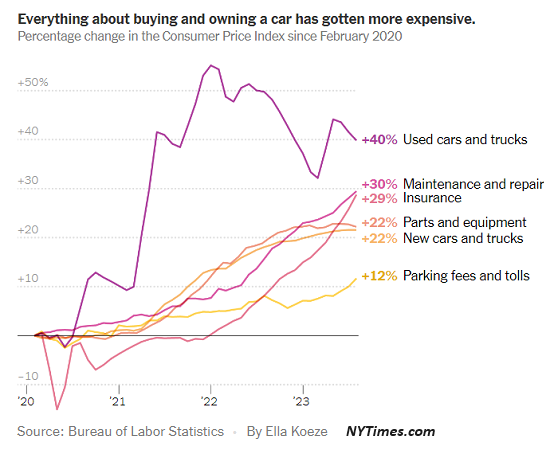
We're told our vehicles are so much better now, but this too is open to debate. Cars and trucks cost a fortune now, and they're bigger and heavier and dependent on electronics that can't be repaired at home and that are super-costly to repair. And what exactly makes them so much better? Recall that we all managed to get by without rearview cameras and hands-free mobile phone technology for decades. Let's look at vehicles as transport, not rolling entertainment centers.

My 1979 Honda Accord (bought used for $2,600 ($7,350 in today's dollars) operated for many years with little more than routine maintenance despite being 8 years old when I bought it. It got about the same mileage (40 MPG) as my current 2016 Civic, which has a bigger engine and is much heavier. Is it a "better" vehicle given that repair estimates of $3,000 or more are now the norm? I could still replace a defective sensor in my 1998 Civic myself. Now--forget it.

In terms of repairability, modern vehicles are off-the-scale worse than the highly reliable vehicles of 30 or even 40 years ago.

Given the impossibility of doing much more than changing the oil at home and the insane costs of repairs, it's clear that the hedonics aren't worth the stupefying increases in costs. The same can be said of the 4-cylinder pickup trucks of that era, which did the same work as the far larger, far more costly and unrepairable trucks of today that cost $80,000. How many hours of work does it take now to own and operate a vehicle? Far more than in the past.


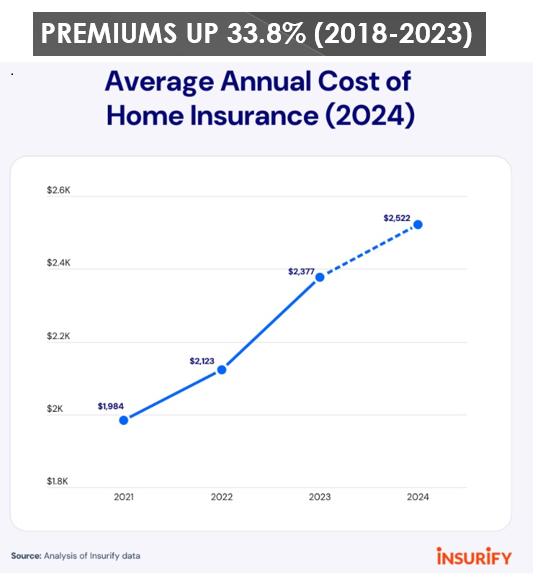
In the 1980s, I paid my annual home insurance with a few days' labor. Is that possible now? Sure, if you make $80/hour. Even at that rate, it takes a couple weeks' earnings to pay home insurance in some areas. And yet we're all more prosperous now?


How about the cost of building a new home? In the early 1980s, I built my own 1,400 square foot conventional house with a two-car garage for $26,000, which equates to about $90,000 in today's dollars. It took 2,600 hours of work to pay for my house in full (not counting my carpentry labor). I performed all the labor other than the licensed subcontractors (electrical, plumbing, cesspool excavation, carpet installation, etc.).

Can an owner-builder construct the equivalent house today for 2,600 hours of work? At $30/hour, that's $78,000. Good luck building a middle-class house turnkey (all appliances, flooring, etc.) for $78,000, even if you do all the carpentry yourself. That might cover the materials--but maybe not.

Around this same time (1983) I built numerous modest starter homes as a fully licensed and insured contractor for under $35,000, which equates to $110,000 in today's dollars. Compare this to today, where you need a construction loan of $400,000 to build a nothing-special middle-class house.

Are the houses "better" today? In terms of the quality and durability of materials and appliances, they're worse. The materials today are low quality, as are the appliances. 30 or 40 years ago, you could buy a fridge, washer, stove/oven, etc. and it would last decades. Now, all I hear are accounts of costly appliances failing in a few years--and that's been my experience. Today's lumber is lower quality, too, as is the hardware. Standard (i.e. not fancy-expensive) locksets in 50-year old houses are still untarnished and working fine. Modern hardware is--sorry to be blunt--mostly rubbish.

Meanwhile, as the costs in hours needed to pay for essentials have soared, we're told by apologists and propaganda pundits that cheap TVs and clothing have offset the the collapse of our purchasing power. Does anyone else find this ceaseless spew of lies irksomely misleading?

The collapse of quality has stripped away the purchasing power of earnings. Two generations ago, you could buy just about anything you needed used for a low cost, and that product would last for years or decades. My Mom bought a "vintage" dining set in 1970 that supposedly came around the Horn. Given the square nails and other indicators, I would estimate it was 100 years old at that time. I still use it today, so it's 150 years old. I've reglued some of the chairs, but other than that, they've been zero-cost for 50 years.

Are the chairs being bought today at Ikea going to last 150 years? I've repaired many that fell apart in the first year. The same can be said of almost everything being manufactured today. This collapse of quality has dramatically reduced the purchasing power of wages in fundamental ways.

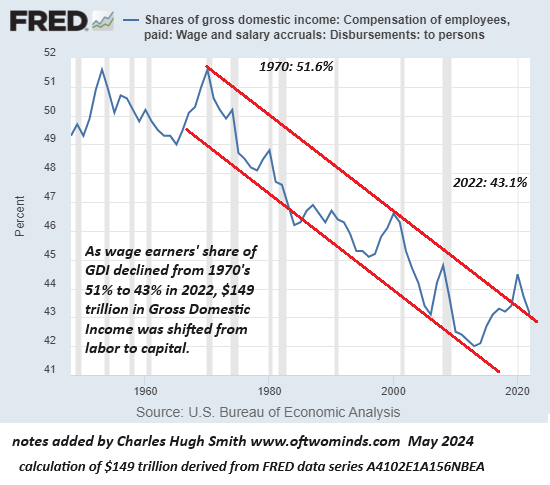
Then there's this chart: wages' share of the economy, which has dropped from 51.6% in 1975 to 43% today. Given that the U.S. GDP is $29 trillion, each point of that decline translates into major money. 8% of $29 trillion is $2.3 trillion. Now there are various ways to measure this, but you get the point: wage earners are receiving a smaller share of the economy's output.


How many hours of work does it take to buy essential products and services now, and how long do the products last? By this measure, we're poorer, much poorer. After paying for essentials, we have less disposable income available to save or spend on non-essential stuff.

In the mid-1970s, I was having lunch with two older buddies. One was a public school teacher (he taught science) who'd served in West Africa in the Peace Corps, the other was an ex-Marine officer who'd served boots on the ground in Vietnam. Both agreed that if anyone was serious about achieving anything that required money, they had to save 40% to 50% of their net pay. Anything less indicated they weren't actually serious.

With even an average measure of frugality, this was entirely possible. It was well within reach. How many wage earners today save 40% - 50% of their net pay? Sure, some do, but how many do so without help from the family, special discounts or subsidies, or earnings in the top 10%? Not many. And this is proof-positive we're not just poorer now than we were 40 years ago, we're much, much poorer.

If we refuse to accept reality, what are the chances we'll be able to fix what's broken? Delusion and wishful thinking are not successful survival strategies.

New podcast: Seeking a Culture of Honor and Integrity with Emerson Fersch and Amy LeNoble (59 min)


My recent books:

Disclosure: As an Amazon Associate I earn from qualifying purchases originated via links to Amazon products on this site.

The Mythology of Progress, Anti-Progress and a Mythology for the 21st Century print $18, (Kindle $8.95, Hardcover $24 (215 pages, 2024) Read the Introduction and first chapter for free (PDF)

Self-Reliance in the 21st Century print $18, (Kindle $8.95, audiobook $13.08 (96 pages, 2022) Read the first chapter for free (PDF)

The Asian Heroine Who Seduced Me (Novel) print $10.95, Kindle $6.95 Read an excerpt for free (PDF)

When You Can't Go On: Burnout, Reckoning and Renewal $18 print, $8.95 Kindle ebook; audiobook Read the first section for free (PDF)

Global Crisis, National Renewal: A (Revolutionary) Grand Strategy for the United States (Kindle $9.95, print $24, audiobook) Read Chapter One for free (PDF).

A Hacker's Teleology: Sharing the Wealth of Our Shrinking Planet (Kindle $8.95, print $20, audiobook $17.46) Read the first section for free (PDF).

Will You Be Richer or Poorer?: Profit, Power, and AI in a Traumatized World
(Kindle $5, print $10, audiobook) Read the first section for free (PDF).

The Adventures of the Consulting Philosopher: The Disappearance of Drake (Novel) $4.95 Kindle, $10.95 print); read the first chapters for free (PDF)

Money and Work Unchained $6.95 Kindle, $15 print)
Read the first section for free


Become a $3/month patron of my work via patreon.com.

Subscribe to my Substack for free


NOTE: Contributions/subscriptions are acknowledged in the order received. Your name and email remain confidential and will not be given to any other individual, company or agency.

Thank you, Steve K. ($250), for your beyond-outrageously generous subscription to this site -- I am greatly honored by your steadfast support and readership.


Thank you, Michael M. ($7/month), for your superbly generous subscription to this site -- I am greatly honored by your support and readership.


Thank you, John ($70), for your marvelously generous subscription to this site -- I am greatly honored by your support and readership.


Thank you, Boris B. ($70), for your splendidly generous subscription to this site -- I am greatly honored by your support and readership.

Read more...

Monday, December 09, 2024

Grey Swans Are Circling

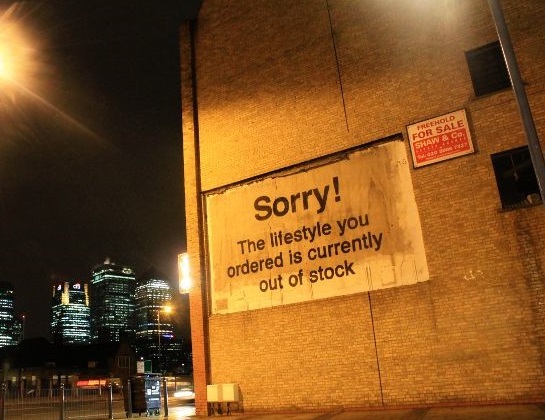
The lifestyle of a stable New Gilded Age is out of stock.

History is either "one damned thing after another"--a chaotic collection of random events--or there are connections between events that are not readily visible. The study of history includes both rooting around for more factual evidence to aid our understanding, and interpreting what is known--both the factual evidence and what people living at that time described and thought was happening.

Two recent events invite interpretation: the sudden collapse of Syria's regime and the assassination of an American CEO in America's financial capital. These can be viewed as unique one-off events of little future import or they can be viewed as watershed events, harbingers of a future far different than the present.

A systemic case can be made that the grey swans circling above us are harbingers of transformative change. What is a grey swan? A grey swan is an event that is known and possible to happen, but which is assumed to be unlikely to occur. The term derives from Nassim Taleb's black swan theory, which describes an event that is unlikely but unknown.

The explanation machine is already spewing out reams of reasons why Syria's dynasty collapsed practically overnight after enduring for decades in a tumultuous region riven by war and conflict. What's strikingly difficult to explain neatly and coherently is how everything is forever until it is no more. Are there causal factors that are common to all such sudden collapses of regimes that appeared to be if not forever, then demonstrably durable?

This raises interesting questions. If we identify the causal factors of sudden collapse, are they discernable in other nations that appear stable at the moment? Could some of these factors act like viruses, and spread to neighboring countries, or via the Internet, to distant lands that share similar profiles? Could such a collapse act as a domino falling, providing the impetus to other fragile states collapsing?

Equally interesting is the mass of propaganda being spewed to cover up the systemic vulnerabilities that might have played a role in the Syrian regime's collapse. The tsunami of propaganda is intended to bolster the everything is forever narrative, but the enormity and virulence of the propaganda effort suggests the opposite: extreme vulnerability and fear of other regimes that they could be next.

Discussions of what triggered the Western Roman Empire's collapse shed some light on the ease of embracing an interpretation that misses the mark. Gibbon concluded that Christianity undermined Rome's coherence; others view Christianity as the alternative structure that enabled Europe to maintain critical coherence in the centuries after Western Rome fell. (The Eastern Roman Empire--the Byzantine Empire--had a different set of circumstances and endured in truncated form for almost a thousand years after Rome fell.)

Moral and social decay are often listed as causal factors, but dismissed by those who see the increasingly capable Barbarian armies as the cause of Rome's collapse. Others have widened the narrative from war and internal decay to climate change and the ravages of pandemics.

The relevance of all these factors leads to a diagnosis of polycrisis--the collapse cannot be attributed to any one factor but to the confluence of many factors, each of which undermined the status quo's moral, financial and material bases which fatally destabilized the coherence of the regime's military and political responses.

From the perspective of polycrisis, the collapse of Syria's regime could be a harbinger of future collapses, not a one-off event. The reason for this is that many of the keystone/linchpin elements of polycrisis are visibly global in nature: they affect every region and nation-state, regardless of size or location.

Sudden collapses of key regimes tend to unleash forces that destabilize other regimes, or act as triggers for regimes to take actions which are initially viewed as protective which end up imploding the regime from within.

Humans like to think we're in charge, but forces such as extreme weather and demographic decline are not controllable in the same way as declarations of war, which tend to exacerbate whatever problem the war was intended to solve.

History is definitive in one regard: there are discernable eras of widespread turmoil, conflict, demographic decline, destabilization and the collapse of the status quo. The Warring States era in China comes to mind, as do the 1600s in Europe.

Only time will tell if Syria's regime collapse is the first inning of a long game of global destabilization, or if it is a one-off event with limited knock-on consequences. If we line up the systemic elements of polycrisis that are already evident globally, the argument that it will all blow over with minimal long-term impact seems unpersuasive.

The assassination of an American healthcare CEO illuminates many of America's taboos, realities that cannot be openly stated without immediate vitriol from defenders of the status quo. One such taboo is to state the obvious: an economy-society that defines prosperity by the metrics of corporate profits and a rising stock market rather than the well-being of its citizenry is an economy-society begging for overthrow.

Matt Stoller's essay on this event provides much-needed historical context for domestic violence against the status quo: An Assassin Showed Just How Angry America Really Is. Stoller excerpted quotes from American leaders in the previous era of domestic violence against America's status quo (1886-1920) that reveal their clear understanding that unrestrained corporate power wielded by monopolies and cartels were as oppressive as Communism, though obviously by different means.

To state that extreme asymmetries of wealth and power will eventually incite social disorder on a mass scale is also taboo. When I state this openly, for example, Fix This or Nothing Else Matters (12/3/24) and The Seeds of Social Revolution: Extreme Wealth Inequality (11/15/24) I immediately get vitriolic pushback.

I'm angrily accused of being a Marxist (an accusation equally broad-brush and meaningless as being accused of being a Nazi), and heaped with abuse for thinking that "soaking the rich" is a solution to what is clearly the Invisible Hand of the Free Market doing its magic, making everything better every day, in every way, even as the "prosperity" and the well-being of the bottom 90% of the citizenry are in slow-motion disarray.

To say that the job of every CEO in America is not to provide a quality product or service for the good of the citizenry but to boost the corporation's profits and stock valuation is also taboo. That this is so obviously true is what makes it taboo.

It's also taboo to state that America's corporations have profited immensely from sickening the citizenry to the point that 75% of the populace is at risk of metabolic disorders such as type 2 diabetes. This was not the case 50 years ago. Something changed, and immense profits have been reaped not by improving the public's health but in sickening them and then alleviating the symptoms of these lifestyle diseases.

Three-Quarters of U.S. Adults Are Now Overweight or Obese: A sweeping new paper reveals the dramatic rise of obesity rates nationwide since 1990.

It's equally taboo to state that America's healthcare system isn't actually about healthcare, it's about profits. Please read this account of the amazing healthcare America offers its homeless populace, all without regard to profit, of course:

The Invisible Man: We see right through the unshowered soul living in a car by the beach, or by the Walmart, or by the side of the road. But he's there, and he used to be somebody. He still is. A firsthand account of homelessness in America.

If America has the "best healthcare in the world" available to all, then by all means back up your certitude by switching places with this fellow.

Recall the response of the Monsanto representative when challenged to drink Round-Up since it was so safe. ("F-U!") The well-paid apologists for the status quo know how to lie glibly and attack those who break the taboos, but they never back up their claims with their own personal lifestyle. It's called hypocrisy and moral rot. What Happened to Integrity and Honor? (12/6/24)

When we speak of the present as the New Gilded Age, perhaps we should review the social history of the prior Gilded Age: decades of disorder and violence from the Haymarket bombing in 1886 to the bombing of Wall Street in 1920, with everything from strikes being suppressed with machine guns, shootings of industrial titans and politicians and mail-bombs in between.

That's 34 years of social disorder. But never mind, everything will be fine as long as we avoid saying what's taboo out loud.

The lifestyle of a stable New Gilded Age is out of stock. Maybe history is nothing but random events without any common causal foundations, but to wager that The New Gilded Age is forever may not be a safe bet.


New podcast: Seeking a Culture of Honor and Integrity with Emerson Fersch and Amy LeNoble (59 min)


My recent books:

Disclosure: As an Amazon Associate I earn from qualifying purchases originated via links to Amazon products on this site.

The Mythology of Progress, Anti-Progress and a Mythology for the 21st Century print $18, (Kindle $8.95, Hardcover $24 (215 pages, 2024) Read the Introduction and first chapter for free (PDF)

Self-Reliance in the 21st Century print $18, (Kindle $8.95, audiobook $13.08 (96 pages, 2022) Read the first chapter for free (PDF)

The Asian Heroine Who Seduced Me (Novel) print $10.95, Kindle $6.95 Read an excerpt for free (PDF)

When You Can't Go On: Burnout, Reckoning and Renewal $18 print, $8.95 Kindle ebook; audiobook Read the first section for free (PDF)

Global Crisis, National Renewal: A (Revolutionary) Grand Strategy for the United States (Kindle $9.95, print $24, audiobook) Read Chapter One for free (PDF).

A Hacker's Teleology: Sharing the Wealth of Our Shrinking Planet (Kindle $8.95, print $20, audiobook $17.46) Read the first section for free (PDF).

Will You Be Richer or Poorer?: Profit, Power, and AI in a Traumatized World
(Kindle $5, print $10, audiobook) Read the first section for free (PDF).

The Adventures of the Consulting Philosopher: The Disappearance of Drake (Novel) $4.95 Kindle, $10.95 print); read the first chapters for free (PDF)

Money and Work Unchained $6.95 Kindle, $15 print)
Read the first section for free


Become a $3/month patron of my work via patreon.com.

Subscribe to my Substack for free


NOTE: Contributions/subscriptions are acknowledged in the order received. Your name and email remain confidential and will not be given to any other individual, company or agency.

Thank you, Ben M. ($70), for your monstrously generous subscription to this site -- I am greatly honored by your support and readership.


Thank you, Brass Mule ($7/month), for your superbly generous subscription to this site -- I am greatly honored by your support and readership.


Thank you, P.B. ($7/month), for your marvelously generous subscription to this site -- I am greatly honored by your support and readership.


Thank you, Mark G. ($7/month), for your splendidly generous subscription to this site -- I am greatly honored by your support and readership.

Read more...

Friday, December 06, 2024

What Happened to Integrity and Honor?

The hope here is that facing the reality of moral collapse frees us of the delusion that fiddling with technocratic financial abstractions and policy tweaks can reverse moral collapse.

Ours is a technocratic culture with a short attention span, and so problems and solutions are understood to be 1) technocratic and 2) instant. The problem is something that can be distilled down to a spreadsheet, formula, algorithm or legalistic policy, and the solution is some modification of spreadsheet, formula, algorithm or legalistic policy: all our problems will go away if we just end the Fed, switch to cryptocurrency, tweak some laws, get rid of the bankers, eliminate an agency, and so on.

These solutions will offer immediate relief. The problems will start melting away the minute we modify the spreadsheet, algorithm, financial settings or legal code.

But what if the problem is the collapse of integrity and honor, a moral rot that has consumed the foundations of our social order? If this is the root problem, then technocratic-financial solutions are the equivalent of excising a wart from the big toe and declaring that as a result of this procedure, the brain cancer has been cured.

What if the problem is that everything we're cheering as Progress is actually the opposite--it's Anti-Progress? What if all the technocratic "advances" that are constantly being hyped as wondrous are actually harming our physical and mental health?

So a product labeled as a "veggie snack" that's nothing more than fat-soaked, sugary potato starch is lauded because it's immensely profitable, a virtue gained by deceiving parents into thinking a "veggie snack" is a healthy snack.

That this is a culture in moral collapse is obvious, but we dare not admit it. That integrity and honor have decayed to the point of parody is equally obvious, but that too doesn't register in a culture attuned to novelty, profit, gadgets, legalese, techno-fantasies and technocratic "solutions" to problems that aren't even visible to technocrats.

Integrity and honor have, along with everything else, been commoditized into something we sell as a "product" or "enhancement." Virtue-signaling has replaced actual integrity, and as the host of my latest podcast observed, the job of corporate CEOs is not to make quality products; their job is to elevate the corporation's stock price by whatever means are available--including hollowing out quality, reliability and durability.

Seeking a Culture of Honor and Integrity with Emerson Fersch and Amy LeNoble (59 min)

In this state of moral collapse, we look to centralized authorities to solve all our problems. But the collapse of integrity and honor does not have a legal, financial or technocratic solution. We have to reverse that collapse ourselves rather than rely on centralized diktats from on high to fix what's broken.

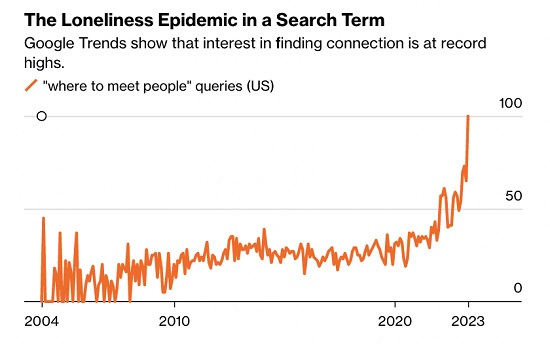
Before we get to the hope, let's first review reality. Here is loneliness--soaring.


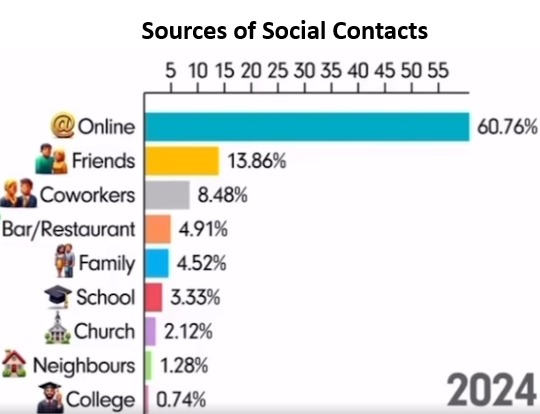
Here's a snapshot of our social contacts: now mostly online:


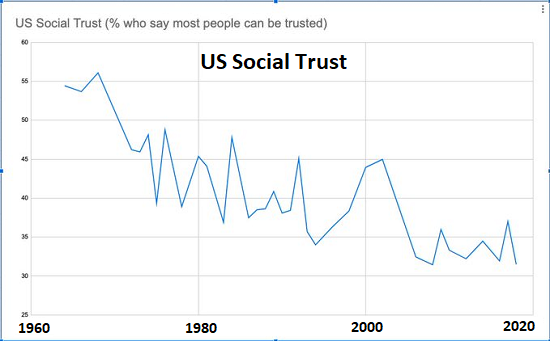
With the easily predictable results: social trust is decaying....


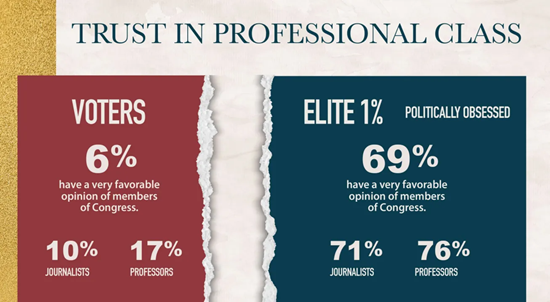
...Along with the bottom 90%'s trust in institutions and centralized authorities, both public and private.


And we all know how positive online interactions are for our collective mental health:


Every one of these graphics depicts a social order in collapse, yet this truth is greeted with silence or delusional misdirections and self-referential parodies being passed off as "solutions."

Let's say we want a lifestyle stripped of denial, moral rot, techno-fantasies and technocratic delusions, a lifestyle of responsibility, accountability, integrity and honor. Oops, sorry, that lifestyle is out of stock and we don't anticipate any reordering.


The hope here is that facing the reality of moral collapse frees us of the delusion that fiddling with technocratic financial abstractions and policy tweaks can reverse moral collapse and Anti-Progress. We are then free to see the problem is spiritual and cultural, realms that we change in our own lives, not by waiting around for central authorities--the state, Big Tech, etc.--to fix for us.

We need a new way of living, not more gadgets and financial "innovations." A restoration of basic integrity and honor cannot be achieved by technocratic "solutions"--policies, crypto, apps, algos, AI--for the belief that these are solutions has blinded us to the decay and collapse of the foundations of the social order.

Yes, it's understandable that we all want a solution to the collapse of integrity and honor to be done for us by some new app or a new law, but that's like thinking the wart on the big toe is the source of the brain cancer. Real social change comes from the ground up, not the top down. I explore these themes in my new book The Mythology of Progress, Anti-Progress and a Mythology for the 21st Century.
(free sample chapter
)

New podcast: Seeking a Culture of Honor and Integrity with Emerson Fersch and Amy LeNoble (59 min)


My recent books:

Disclosure: As an Amazon Associate I earn from qualifying purchases originated via links to Amazon products on this site.

The Mythology of Progress, Anti-Progress and a Mythology for the 21st Century print $18, (Kindle $8.95, Hardcover $24 (215 pages, 2024) Read the Introduction and first chapter for free (PDF)

Self-Reliance in the 21st Century print $18, (Kindle $8.95, audiobook $13.08 (96 pages, 2022) Read the first chapter for free (PDF)

The Asian Heroine Who Seduced Me (Novel) print $10.95, Kindle $6.95 Read an excerpt for free (PDF)

When You Can't Go On: Burnout, Reckoning and Renewal $18 print, $8.95 Kindle ebook; audiobook Read the first section for free (PDF)

Global Crisis, National Renewal: A (Revolutionary) Grand Strategy for the United States (Kindle $9.95, print $24, audiobook) Read Chapter One for free (PDF).

A Hacker's Teleology: Sharing the Wealth of Our Shrinking Planet (Kindle $8.95, print $20, audiobook $17.46) Read the first section for free (PDF).

Will You Be Richer or Poorer?: Profit, Power, and AI in a Traumatized World
(Kindle $5, print $10, audiobook) Read the first section for free (PDF).

The Adventures of the Consulting Philosopher: The Disappearance of Drake (Novel) $4.95 Kindle, $10.95 print); read the first chapters for free (PDF)

Money and Work Unchained $6.95 Kindle, $15 print)
Read the first section for free


Become a $3/month patron of my work via patreon.com.

Subscribe to my Substack for free


NOTE: Contributions/subscriptions are acknowledged in the order received. Your name and email remain confidential and will not be given to any other individual, company or agency.

Thank you, Liz ($70), for your monstrously generous subscription to this site -- I am greatly honored by your support and readership.


Thank you, J.S. ($70), for your superbly generous subscription to this site -- I am greatly honored by your support and readership.


Thank you, Ric G. ($7/month), for your marvelously generous subscription to this site -- I am greatly honored by your support and readership.


Thank you, Alexander G. ($7/month), for your splendidly generous subscription to this site -- I am greatly honored by your support and readership.

Read more...

Tuesday, December 03, 2024

Fix This or Nothing Else Matters

The top 10% are the dog sipping a drink as the cafe burns down, saying "this is fine."

What's the one thing we need to fix or nothing else matters? There are plenty of potential candidates: immigration, healthcare, wokeism, hot war in Europe, inflation, draining The Swamp, etc.

Human history offers a definitive answer, and it's none of these issues. The answer is wealth inequality. Historian Peter Turchin has focused on the tedious task of assembling data (as opposed to opinions, ideological positions and theories) on the crises and collapses of previous nations and empires. The keystone dynamic is soaring wealth inequality, which is shorthand for power inequality, as wealth generates power, income inequality, as wealth generates income, and health inequality, as wealth buys the best healthcare.

Turchin has written a number of books on the topic of social discord and collapse, but his recent article succinctly summarizes his findings: The deep historical forces that explain Trump's win: "We're in a good position to identify just those impersonal social forces that foment unrest and fragmentation, and we've found three common factors: popular immiseration, elite overproduction and state breakdown."

All three are the consequences of exploding wealth inequality. As wealth--which can be understood as claims on future time, energy and productive assets--is concentrated in fewer hands, the prosperity of the bottom 90% decays as costs rise and wages stagnate (i.e. immiseration), the economy no longer produces enough highly paid slots for the ever-increasing production of highly educated, high-expectations professionals, and since extreme concentrations of wealth corrupt the state, the state breaks down as bread and circuses no longer mask the gap between the top 1% (what Turchin calls "the proverbial 1%") and the top 10%, "a highly educated or 'credentialed' class of professionals."

The top 1% and top 10% set the contexts, narratives and agendas of the economy and society, and they're naturally coy about their role in soaring inequality. In their view, the extraordinary rise in their personal wealth is the result not of asset bubbles generated by policies adopted to serve the influential, but of their "hard work" and remarkably excellent decisions--in other words, their soaring private wealth is the natural order of things, and those left behind are, well, the losers in a Darwinian competition which they won and continue winning.

This self-congratulatory hubris cloaks the reality few admit to, which is their wealth is largely the result of policies that inflated bubbles in assets which they happened to own or buy early in the bubble.

The top 10% fear a real rebalancing will transfer some of their wealth to the bottom 90%, and so they cling with fanatic tenacity to the fantasy that increasing their wealth will "trickle down" to the little people. In their view, the correct policy decisions are those that will increase their wealth and income: cut taxes (which fall mostly on the top 10%), run trade and federal budget deficits that keep asset bubbles inflated, reward corporate monopolies and cartels, and promote the fantasy that "draining The Swamp" will somehow magically increase the wages of those who have lost ground for the past 45 years.

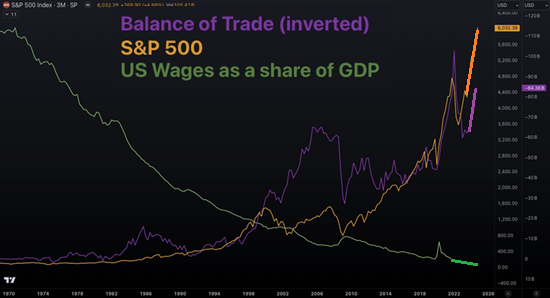
This chart of trade balances (i.e. trade deficits), wages as a share of U.S. GDP and the S&P 500 stock market index (SPX) is instructive. Note the diminutive size of the enormous asset bubbles of 1996-2000 and 2004-2008 compared to the stupendous Everything Asset Bubble which has so richly rewarded the owners of assets...


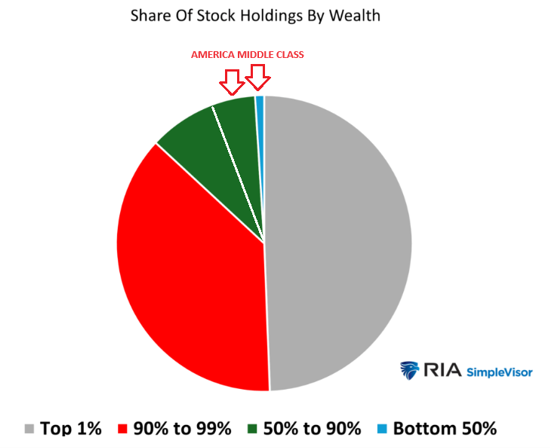
... who just happen to be the top 10%, who own almost 90% of all stocks:


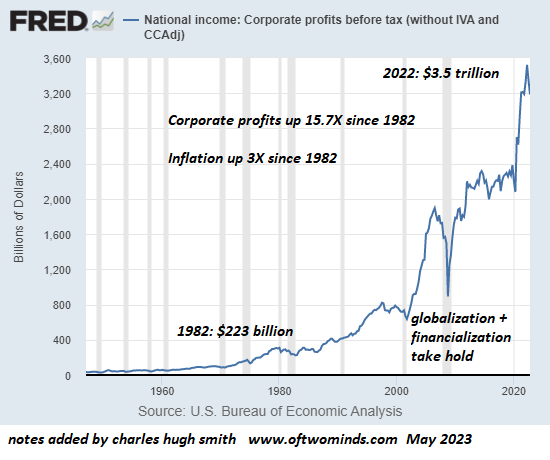
And stockholders have done very, very well as corporate profits have skyrocketed in multiples of inflation:


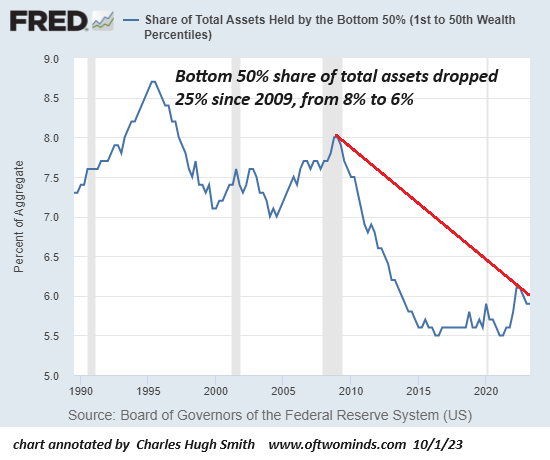
The top 10% are also coy about how the bottom 50% of U.S. households--65 million households, 170 million Americans--fared as the Everything Asset Bubble "raised all boats:" well, not quite all boats, as the bottom 50%'s share of assets fell sharply (down 25%) as the wealth was concentrated in America's ruling / professional class.


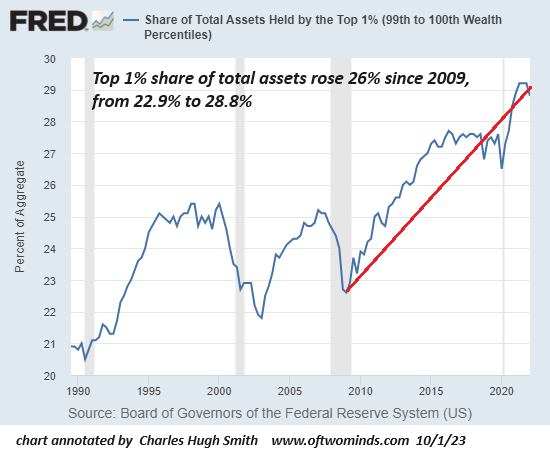
The top 10% are equally coy about the immense divide between the stagnating prospects of the bottom 50% and the unprecedented wealth pouring into the vaults of the top 1% as their share of total assets rose 26%:


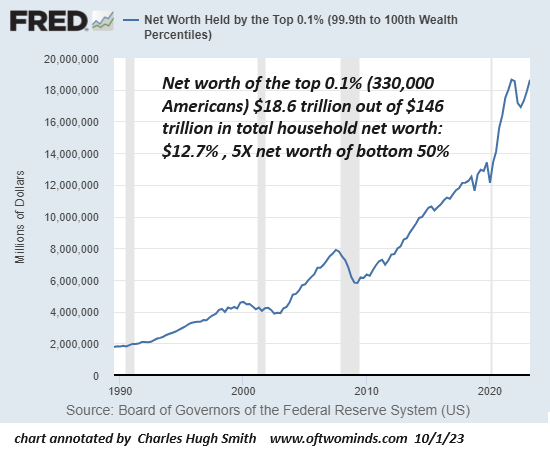
The net worth of the top 0.1% (330,000 Americans) exploded from $4 trillion in 2000 to $20.8 trillion today, more than 5 times the net worth of the bottom 50% of Americans (170 million people).


From low-Earth orbit, these obscured by the self serving realities become visible:

1. The top 10%, regardless of ideology, orbit the same nodes of wealth and power. The ideological differences are exaggerated to mask their common interests. They jet around the world to the same places, eat in the same pricey bistros, hire the same CPAs to "save on taxes," and they own homes in exclusive neighborhoods and manage the same portfolios of soaring stocks.

Turchin describes how counter-elites arise to fragment the status quo, but let's not kid ourselves: these counter-elites are nothing more than manifestations of Christopher Lasch's revolt of the elites, elites who share a keen interest in buying off the bottom 90% with distracting sensationalized "news," misdirecting narratives, and a minimum of bread and circuses. Their only goal is to replace the existing elite: Meet the new boss, same as the old boss.

End Times: Elites, Counter-Elites, and the Path of Political Disintegration (2023)(Peter Turchin)

The Revolt of the Elites and the Betrayal of Democracy (1996)(Christopher Lasch)

2. The top 10% are the dog sipping a drink as the cafe burns down, saying "this is fine." They are defensively aware of the hollowness of their hubristic claims to have "earned my wealth," but blind to the precariousness of their place at the top of the heap. Their complacent embrace of self-congratulatory hubris does not have a good track record in terms of survival strategies. We are in the final stages of let them eat brioche: AI will fix everything, etc.

3. We either fix wealth/power/income inequality or nothing else matters. Everything else is either a symptom or consequence of wealth/power/income inequality or it's signal noise generated to distract the bottom 90% from the 45-year erosion of their standard of living.

Nothing will change until we admit that the policies of the past two generations have only one possible result: extreme concentration of wealth. Either we face this directly or we fiddle around with histrionic distractions until it's too late.


My recent books:

Disclosure: As an Amazon Associate I earn from qualifying purchases originated via links to Amazon products on this site.

The Mythology of Progress, Anti-Progress and a Mythology for the 21st Century print $18, (Kindle $8.95, Hardcover $24 (215 pages, 2024) Read the Introduction and first chapter for free (PDF)

Self-Reliance in the 21st Century print $18, (Kindle $8.95, audiobook $13.08 (96 pages, 2022) Read the first chapter for free (PDF)

The Asian Heroine Who Seduced Me (Novel) print $10.95, Kindle $6.95 Read an excerpt for free (PDF)

When You Can't Go On: Burnout, Reckoning and Renewal $18 print, $8.95 Kindle ebook; audiobook Read the first section for free (PDF)

Global Crisis, National Renewal: A (Revolutionary) Grand Strategy for the United States (Kindle $9.95, print $24, audiobook) Read Chapter One for free (PDF).

A Hacker's Teleology: Sharing the Wealth of Our Shrinking Planet (Kindle $8.95, print $20, audiobook $17.46) Read the first section for free (PDF).

Will You Be Richer or Poorer?: Profit, Power, and AI in a Traumatized World
(Kindle $5, print $10, audiobook) Read the first section for free (PDF).

The Adventures of the Consulting Philosopher: The Disappearance of Drake (Novel) $4.95 Kindle, $10.95 print); read the first chapters for free (PDF)

Money and Work Unchained $6.95 Kindle, $15 print)
Read the first section for free


Become a $3/month patron of my work via patreon.com.

Subscribe to my Substack for free


NOTE: Contributions/subscriptions are acknowledged in the order received. Your name and email remain confidential and will not be given to any other individual, company or agency.

Thank you, TMacro06 ($70), for your monstrously generous subscription to this site -- I am greatly honored by your support and readership.


Thank you, William B. ($70), for your superbly generous subscription to this site -- I am greatly honored by your support and readership.


Thank you, Merbeltz ($7/month), for your marvelously generous subscription to this site -- I am greatly honored by your support and readership.


Thank you, Douglas K. ($7/month), for your splendidly generous subscription to this site -- I am greatly honored by your support and readership.

Read more...

Terms of Service

All content on this blog is provided by Trewe LLC for informational purposes only. The owner of this blog makes no representations as to the accuracy or completeness of any information on this site or found by following any link on this site. The owner will not be liable for any errors or omissions in this information nor for the availability of this information. The owner will not be liable for any losses, injuries, or damages from the display or use of this information. These terms and conditions of use are subject to change at anytime and without notice.

RE: European Union AI Act, and Our Use of Generative AI Tools and Agents Policy

All text on this site is composed by Charles Hugh Smith or by a credited guest-author. No Generative AI Tools are used in the composition / writing of any text or graphic content created by Charles Hugh Smith. This site deploys no AI agents or generative AI tools. This site is not responsible for the disclosures, use or non-use of AI agents or generative AI tools in advertisements displayed by Investing Channel or other ad placement services.

Audio files generated by text-to-audio transcription tools are identified as such.

Our Privacy Policy:

Correspondents' email is strictly confidential. This site does not collect digital data from visitors or distribute cookies. Advertisements served by third-party advertising networks such as Investing Channel may use cookies or collect information from visitors for the purpose of Interest-Based Advertising; if you wish to opt out of Interest-Based Advertising, please go to Opt out of interest-based advertising (The Network Advertising Initiative) If you have other privacy concerns relating to advertisements, please contact advertisers directly.

PRIVACY NOTICE FOR EEA INDIVIDUALS

This section covers disclosures on the General Data Protection Regulation (GDPR) for users residing within EEA only. GDPR replaces the existing Directive 95/46/ec, and aims at harmonizing data protection laws in the EU that are fit for purpose in the digital age. The primary objective of the GDPR is to give citizens back control of their personal data. Please follow the link below to access InvestingChannel's General Data Protection Notice.
https://stg.media.investingchannel.com/gdpr-notice/

Notice of Compliance with The California Consumer Protection Act

This site does not collect digital data from visitors or distribute cookies. Advertisements served by a third-party advertising network (Investing Channel) may use cookies or collect information from visitors for the purpose of Interest-Based Advertising. If you do not want any personal information that may be collected by third-party advertising to be sold, please follow the instructions on this page: Do Not Sell My Personal Information.

Regarding Cookies:

This site does not collect digital data from visitors or distribute cookies. Advertisements served by third-party advertising networks such as Investing Channel may use cookies or collect information from visitors for the purpose of Interest-Based Advertising; if you wish to opt out of Interest-Based Advertising, please go to Opt out of interest-based advertising (The Network Advertising Initiative) If you have other privacy concerns relating to advertisements, please contact advertisers directly.

Our Commission Policy:

Though I earn a small commission on Amazon.com books and gift certificates and gold (BullionVault) purchased via links on my site, I receive no fees or compensation for any other non-advertising links or content posted on my site.

Copyright Notice:

All original images (Drawings and Photographs), text (essays, books and works of fiction), audio and video recordings, musical compositions, graphic design, graphic design elements and HTML coding on this site are the copyrighted work of Charles Hugh Smith unless otherwise credited or noted. They are published as information for the private use of site visitors, and any reproduction or redistribution of this content or coding in any media in any format or distribution channel (text, audio, video/film, web) without the written permission of the copyright holder is strictly prohibited. All rights in all media reserved globally.

  © Blogger templates Newspaper III by Ourblogtemplates.com 2008

Back to TOP