In periods of uncommon volatility, crises and transitions manifest in unexpected ways.
Things change, sometimes tumultuously. The unevenness of change has generated a number of memorable descriptions, from the pivotal role crises play in ushering in dramatic changes ("There are decades where nothing happens; and there are weeks where decades happen" (V. Lenin) to the asymmetric distribution of epochal changes ("The future is already here--it's just not evenly distributed" (William Gibson) to philosophic commentaries on the permanence of impermanence, change is the one constant, the world is in perpetual flux: ("No man ever steps in the same river twice, for it's not the same river and he's not the same man" (Heraclitus).
In the modern era, we are accustomed to technological changes, and laud the overthrow of previous ways of living as "creative destruction," though the changes might be more destruction than creative.
Though these are unwelcome, we understand changes wrought by natural events (earthquakes, pandemics, etc.) and war.
Some of the least understood manifestations of change are social changes, which are complex in having numerous inter-connected sources which operate in different spheres and on different time lines.
For example, wartime demands for additional labor as males entered military service en masse in World War II brought females into the labor force in unprecedented numbers and roles, an economic change that added new dynamics to longstanding expansions of women's rights to own property as individuals, vote, etc.
There are no perfect models of social change, but the most insightful and universal in my view is the have-nots begin agitating for a rebalancing of asymmetric arrangements favoring the Haves. The Haves naturally view their perquisites and privileges as natural birthrights that cannot be challenged because this is the way the world works: our perquisites and privileges are as natural and permanent as gravity.
The marginalized Have-Nots, possessing the benefits of a clear view from the cheap seats, see the perquisites and privileges as intrinsically unfair arbitrary constructs which not only could be modified, but should be modified to widen the opportunities of all those marginalized in a repressive status quo that favors the Haves.
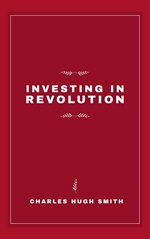
I explore these dynamics in my new book Investing In Revolution.
These pressures to loosen repression of opportunity for the disenfranchised/ marginalized are influenced, positively and negatively, by technological, economic and political forces. New technologies can disrupt the status quo, opening fissures for upward social mobility, or they can enhance the power of the Haves, who naturally reckon all changes should enhance their wealth and power, and are horrified if they loosen their dominance.
Over time, these pressures build, and a crisis has the potential to trigger an avalanche of changes that were as inevitable and unpredictable as change itself. There are many asymmetries between groups of Haves and Have-Nots, and what makes this an especially precarious moment in history is some of the Have-Nots expected to join the Haves as their birthright / the natural order of things, and their marginalization will not be accepted passively.
At the same time, technological changes have breached many of the status quo's barriers, unleashing highly disruptive torrents in communication, the balance of capital and labor, employment, and social norms / expectations. The Have-Nots are keenly aware that their diminished opportunities may suffer further degradation, while the Haves tend to see these torrents as fueling the expansion of their capital / economic dominance.
That they might be the biggest losers in the tumult being unleashed as their asymmetric dominance increases the potential for a structural rebalancing not in their favor--this is not a common concern.
In periods of uncommon volatility, crises and transitions manifest in unexpected ways. What was deemed impossible or outlandish a few years before becomes normalized as the Vital Few--the Pareto Distribution's 4%--influence the 64%, and things change more rapidly than anyone thought possible.
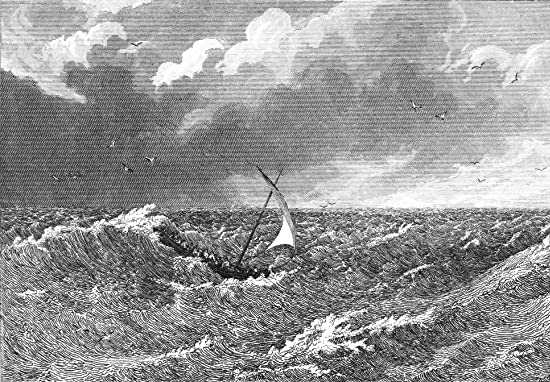
Steering for calmer waters becomes more problematic. Sails tend to shred, masts tend to snap, and rudders tend to break.
My new book Investing In Revolution is available at a 10% discount ($18 for the paperback, $24 for the hardcover and $8.95 for the ebook edition).
Introduction (free)
Check out my updated Books and Films.
Become
a $3/month patron of my work via patreon.com
Subscribe to my Substack for free
NOTE: Contributions/subscriptions are acknowledged in the order received. Your name and email
remain confidential and will not be given to any other individual, company or agency.
|
Thank you, Pensive Heretic ($70), for your marvelously generous subscription
to this site -- I am greatly honored by your support and readership.
|
|
Thank you, BearZ ($7/month), for your magnificently generous subscription
to this site -- I am greatly honored by your support and readership.
|
|
Thank you, Greg ($70) for your superbly generous subscription
to this site -- I am greatly honored by your support and readership.
|
|
Thank you, Sue Ann M. ($32.40) for your splendidly generous subscription
to this site -- I am greatly honored by your support and readership.
|